


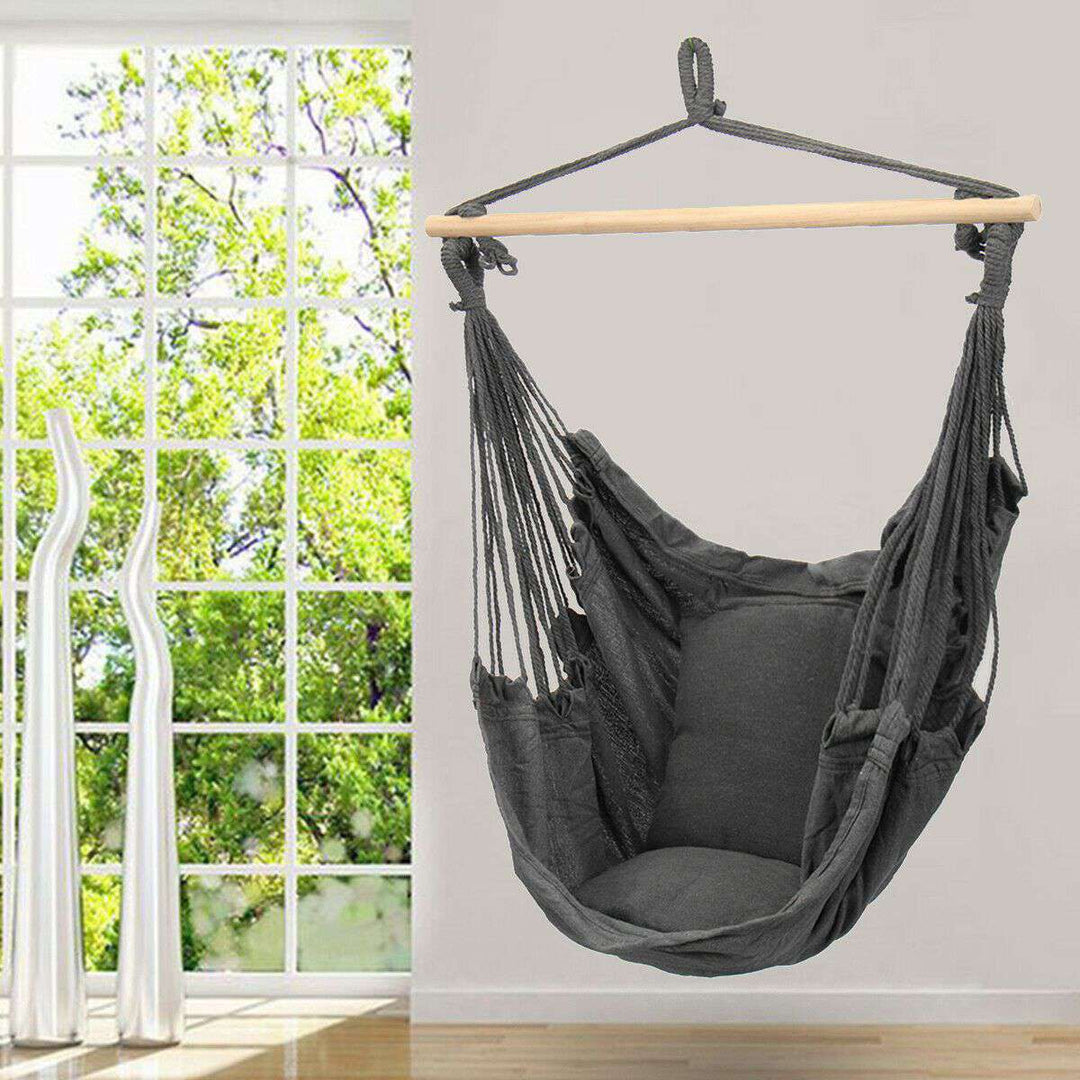
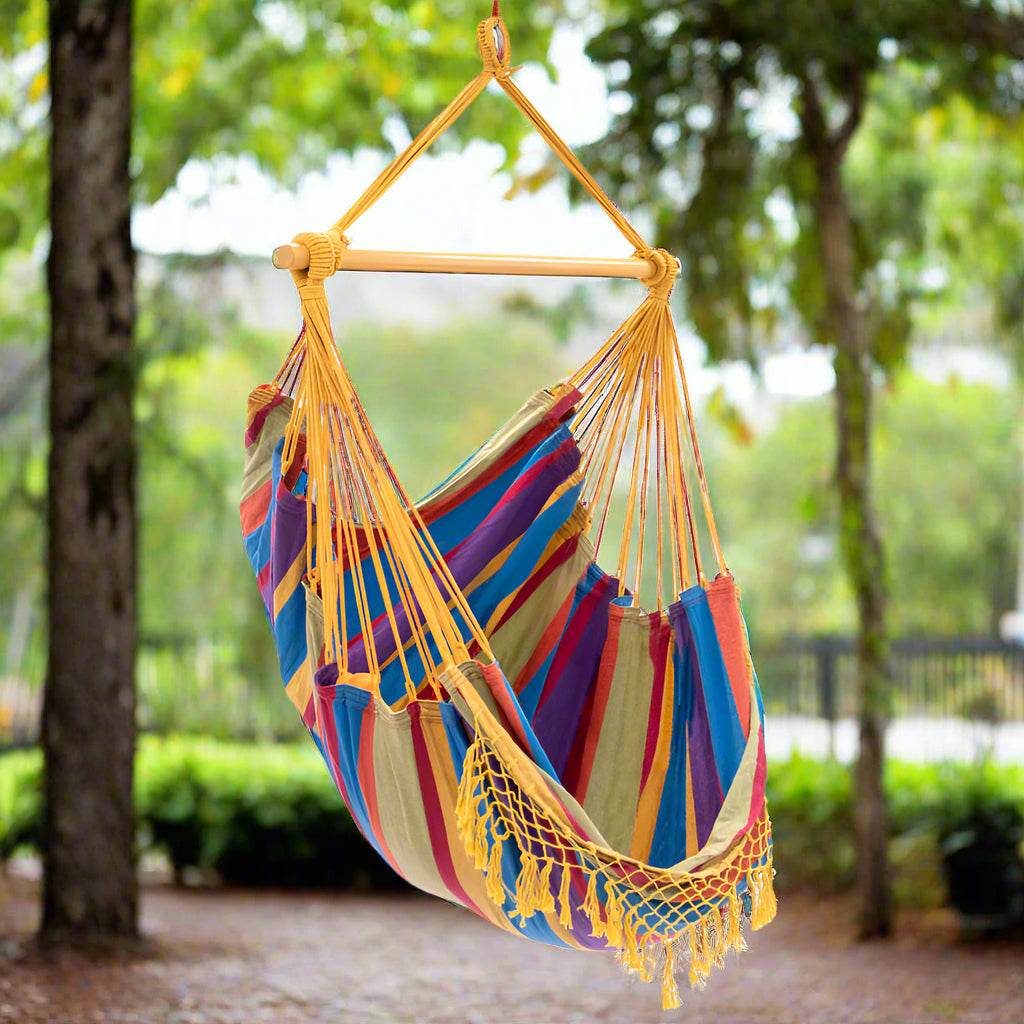
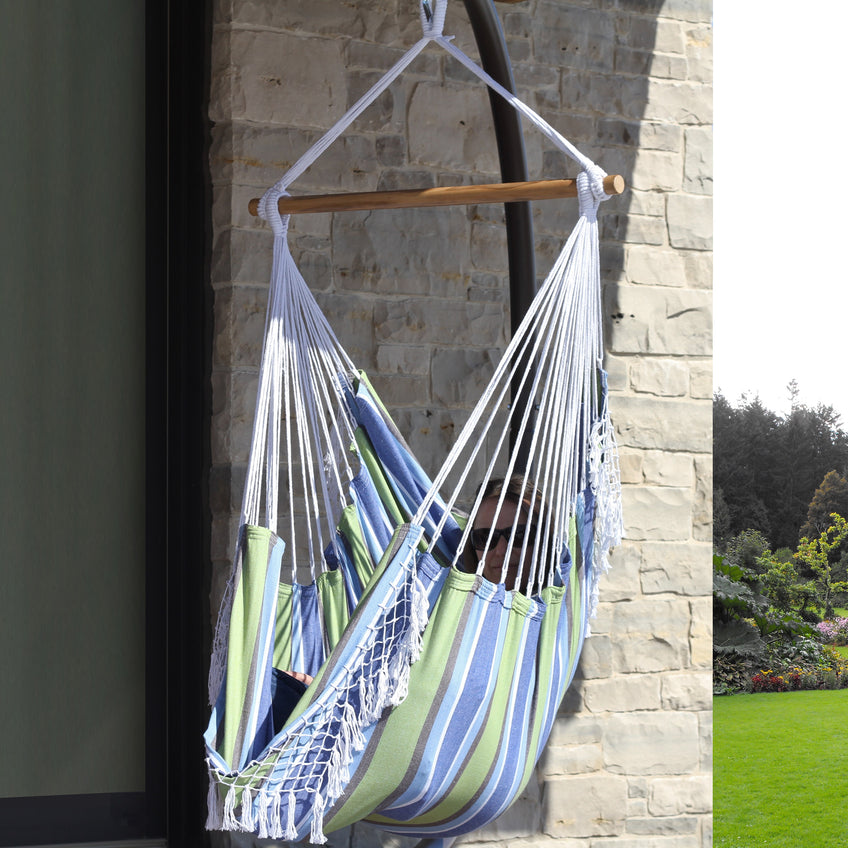
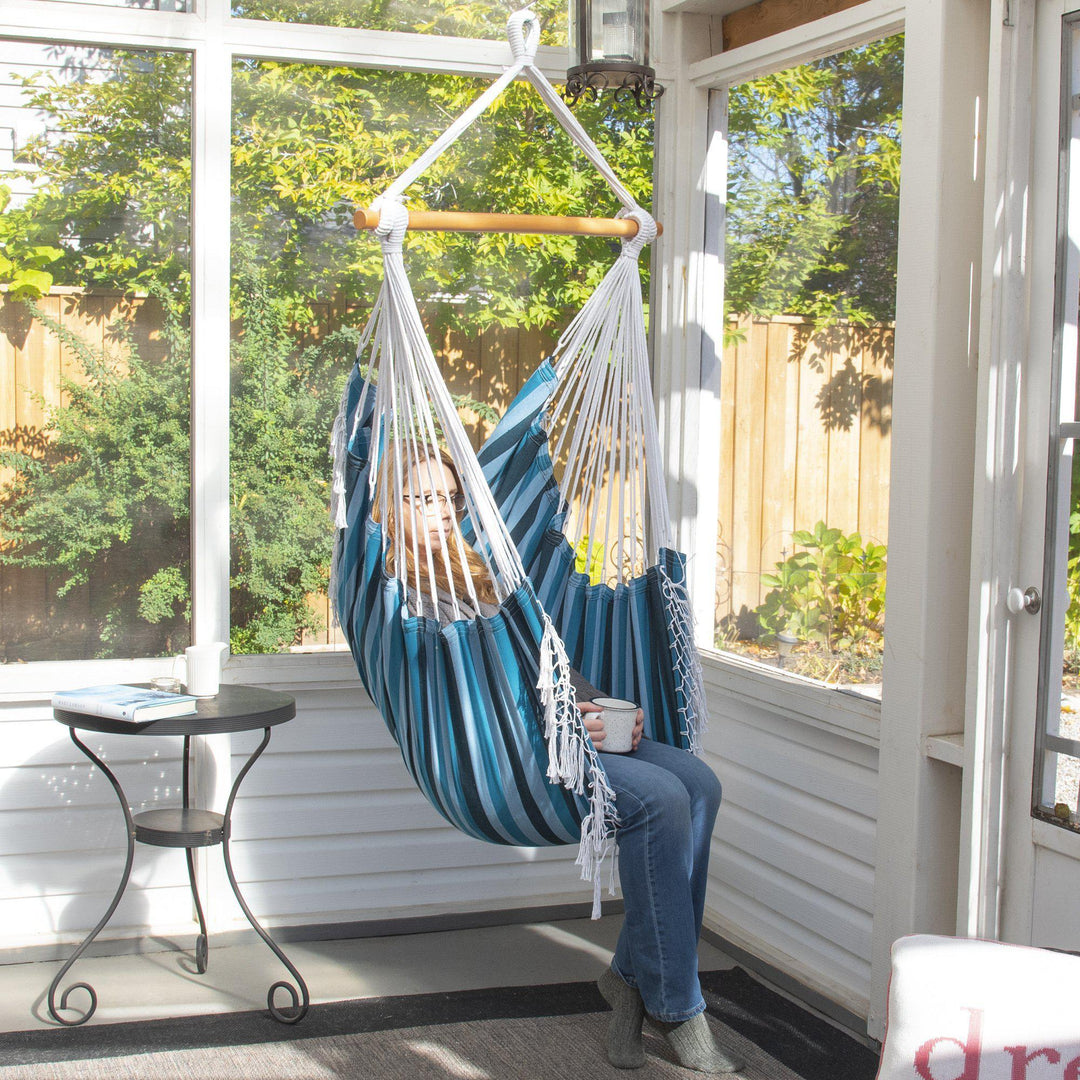
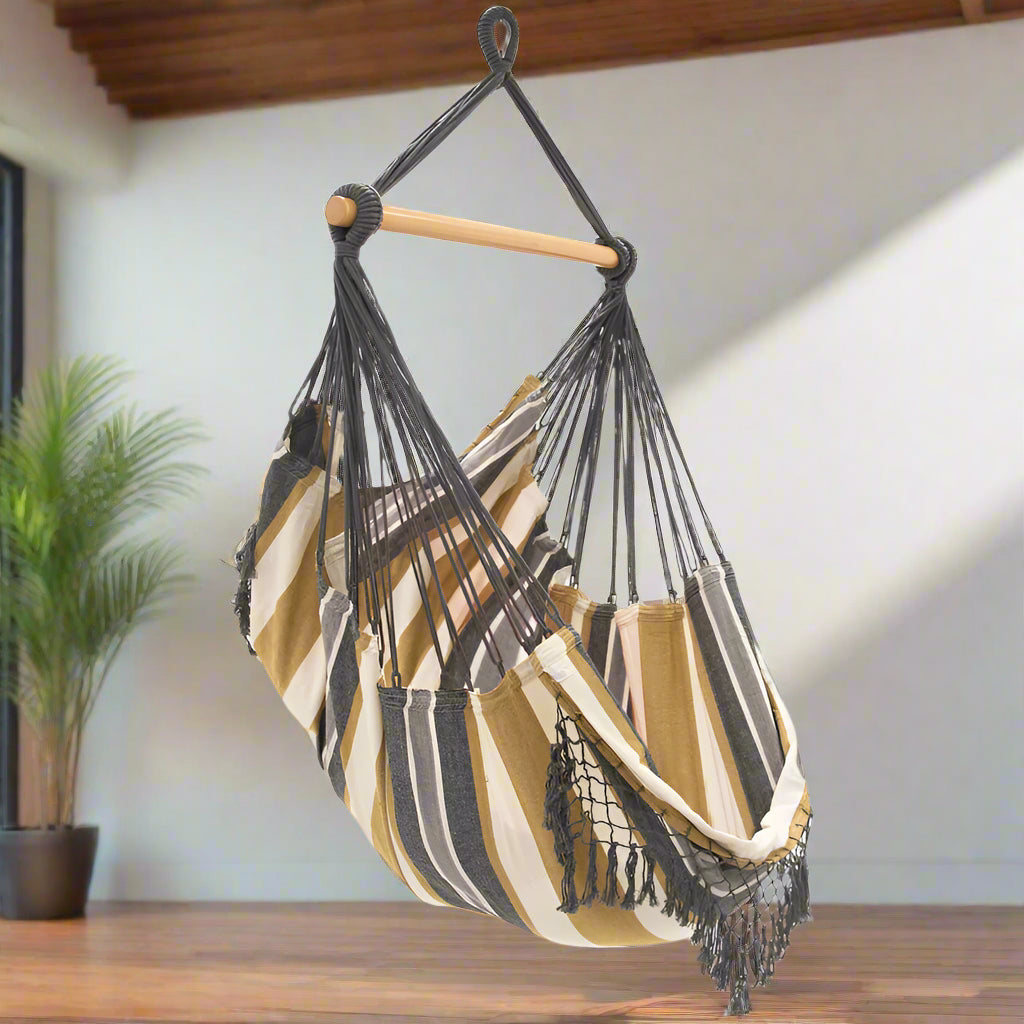
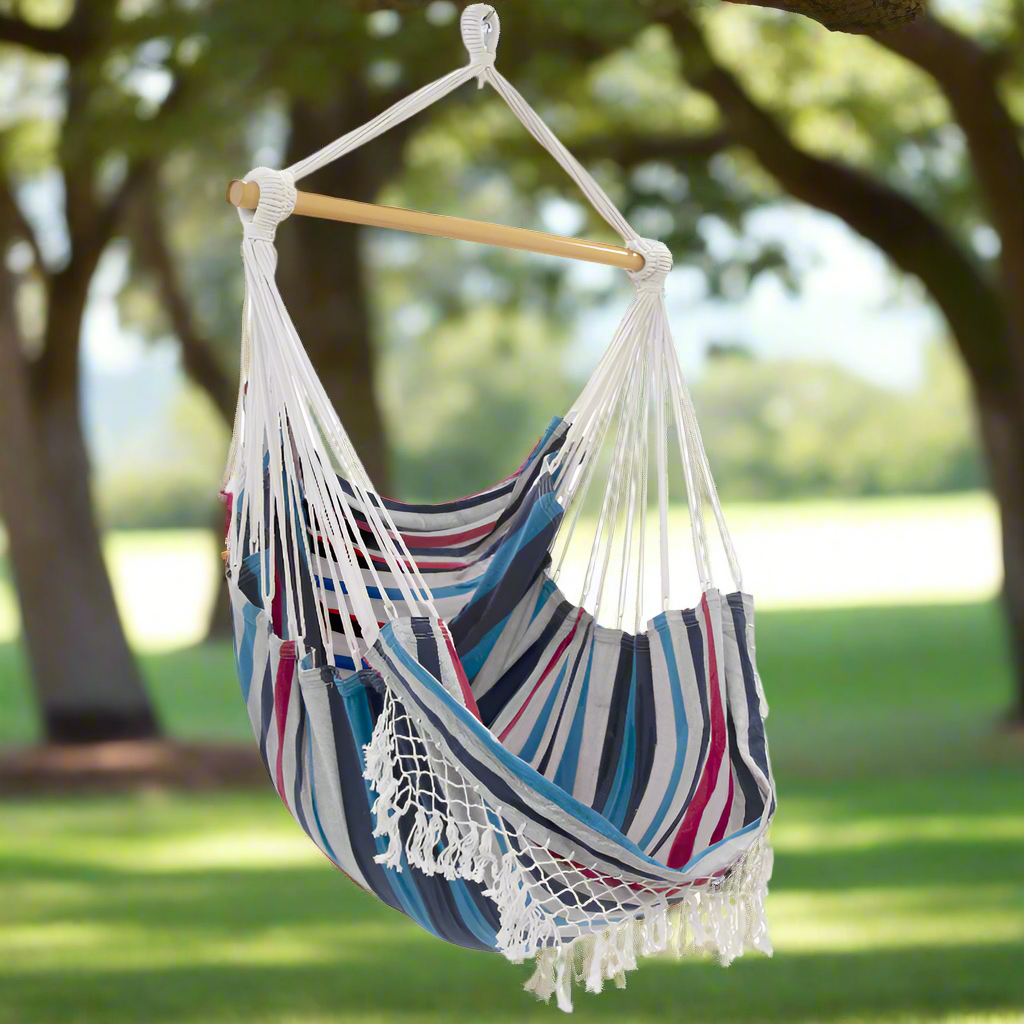
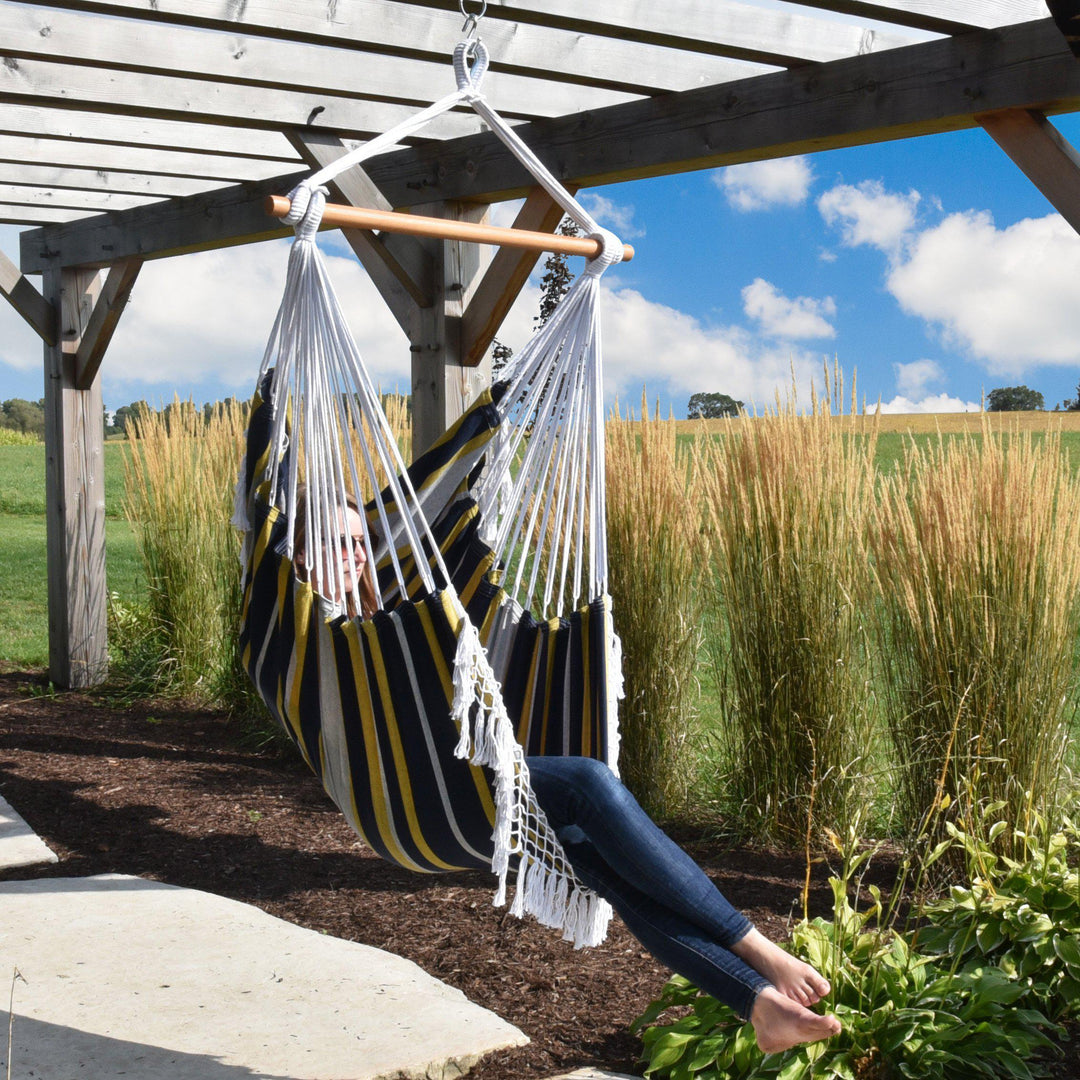
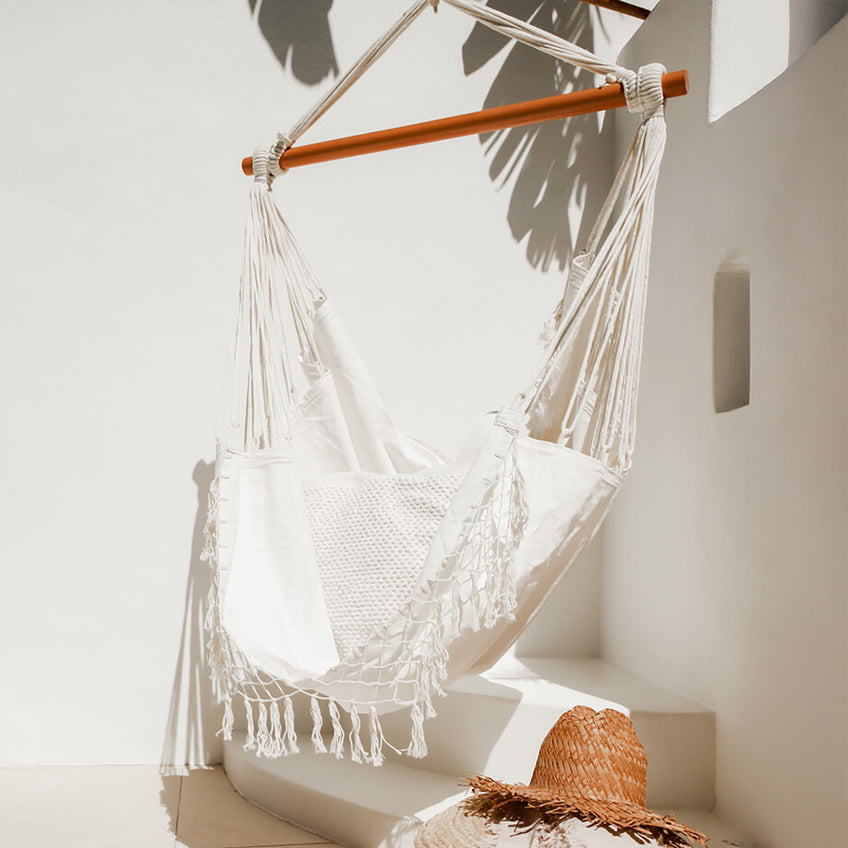
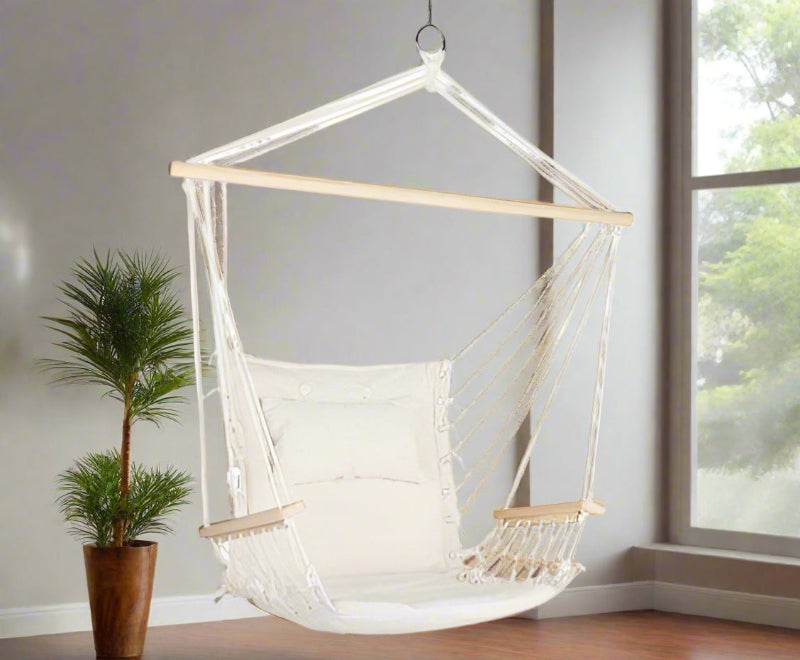
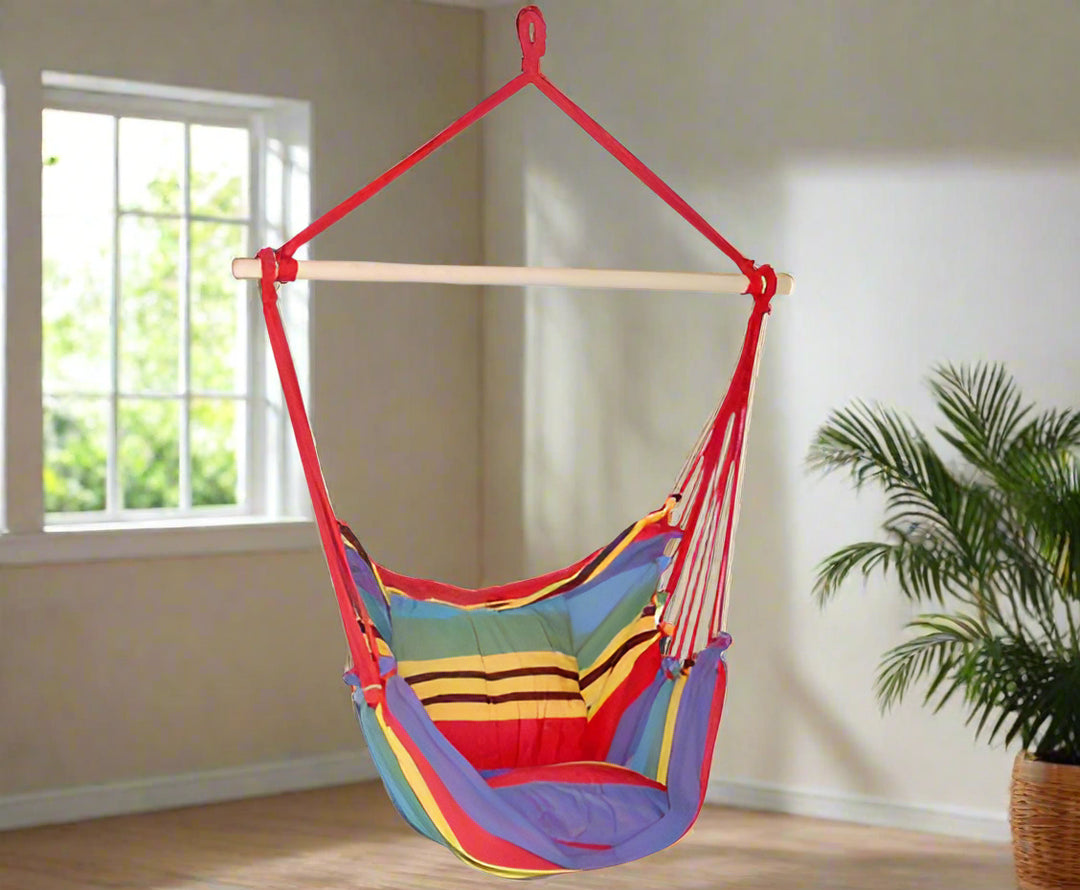
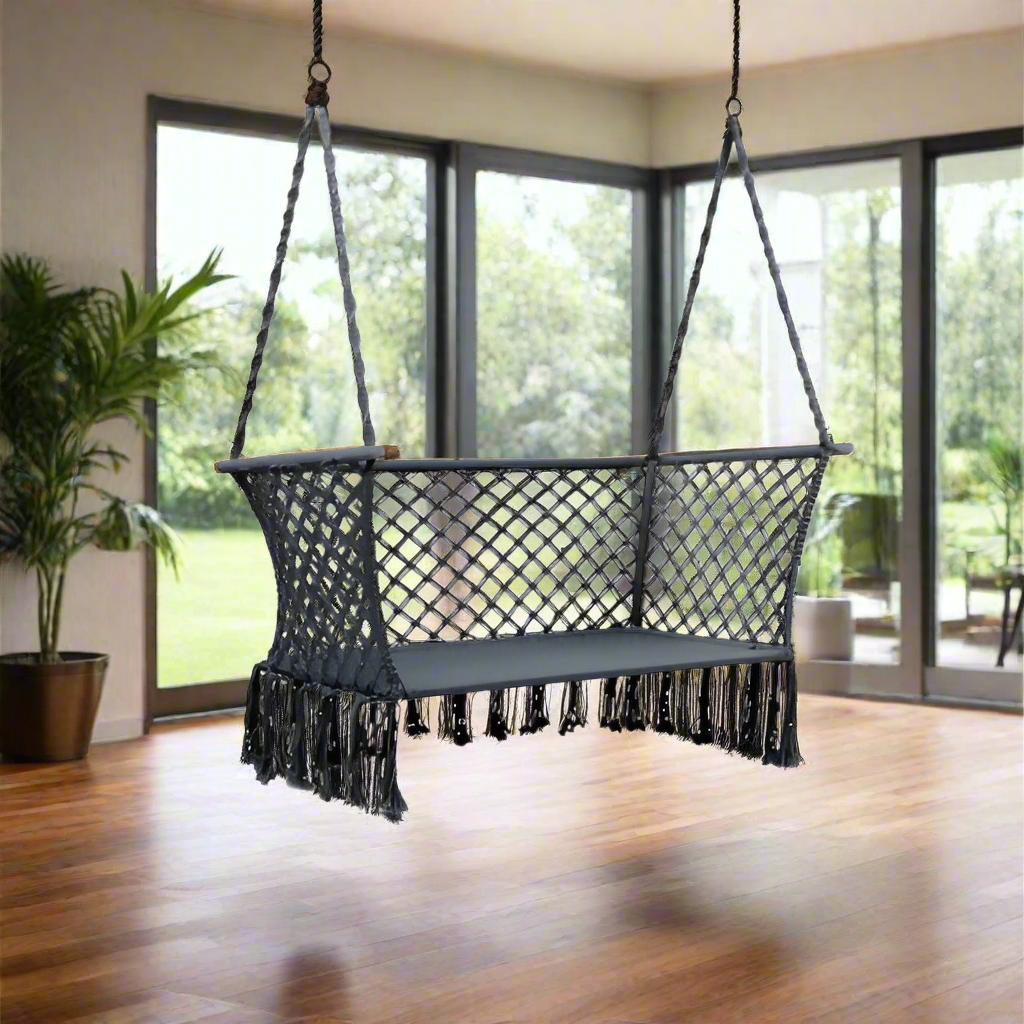
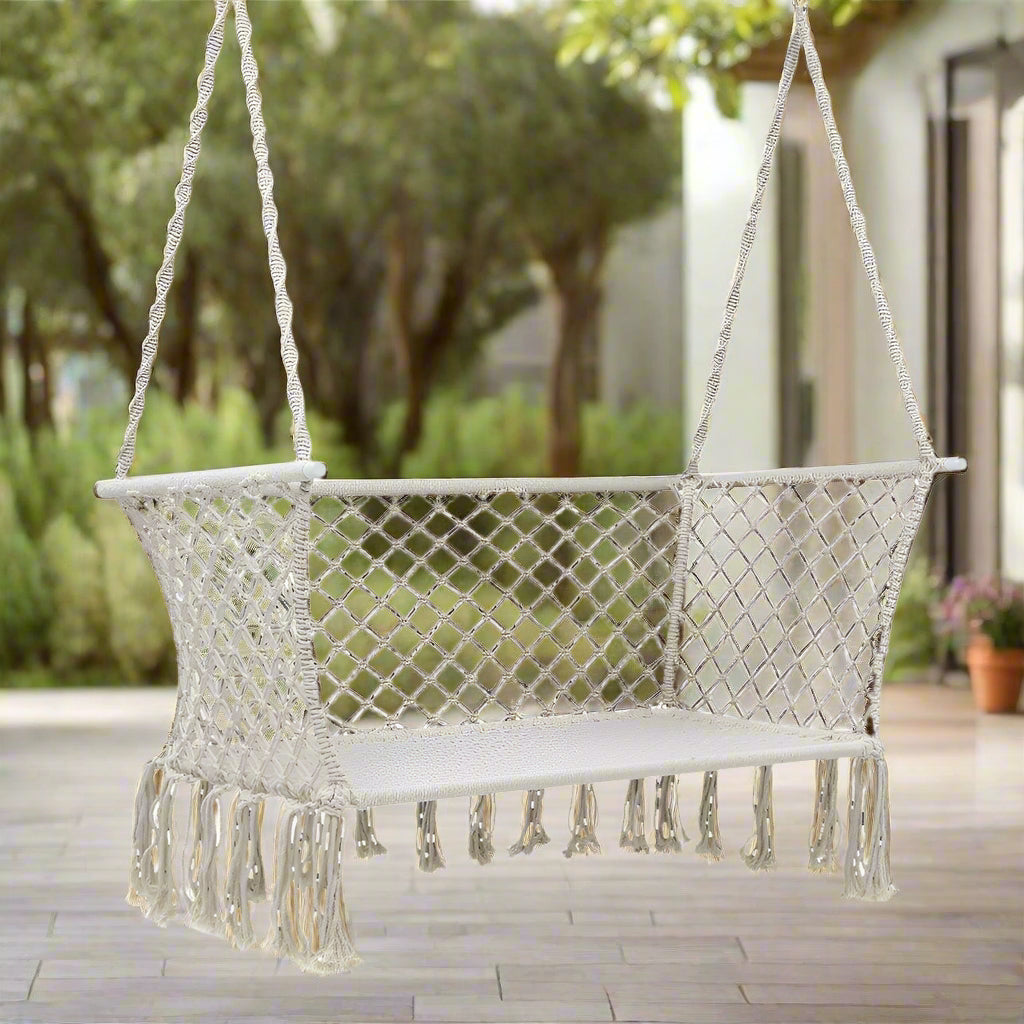
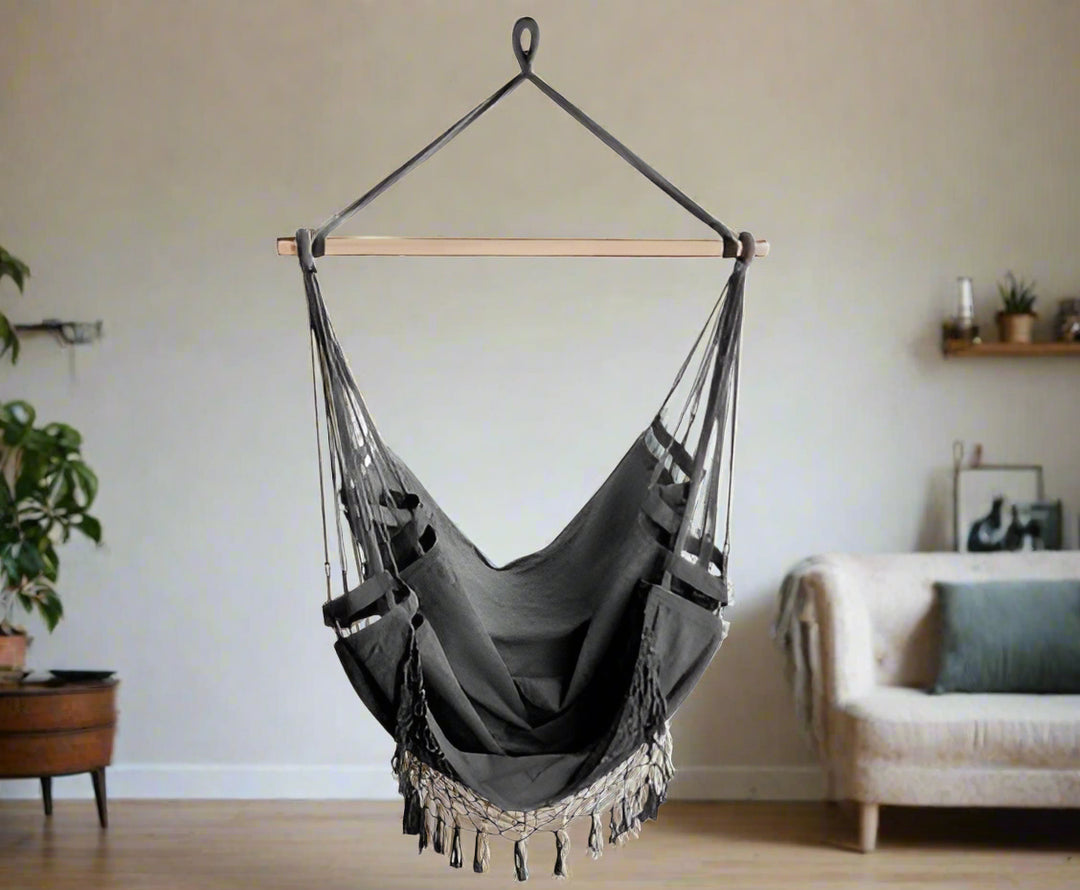
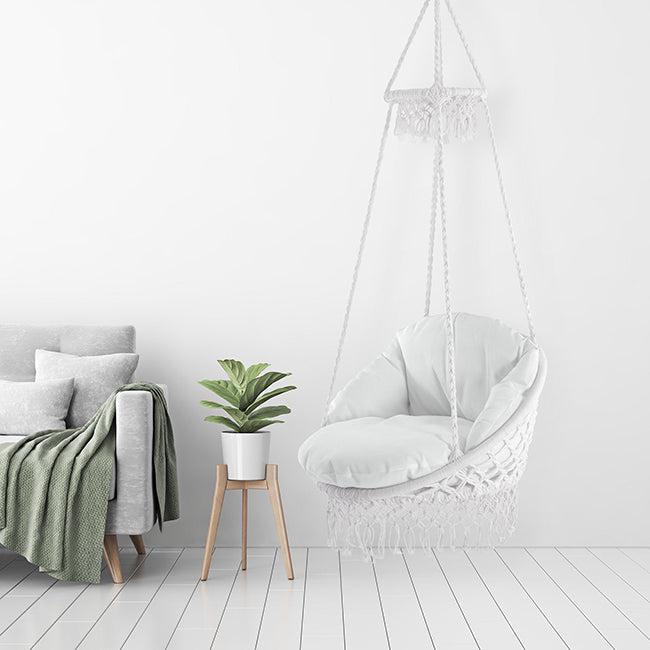
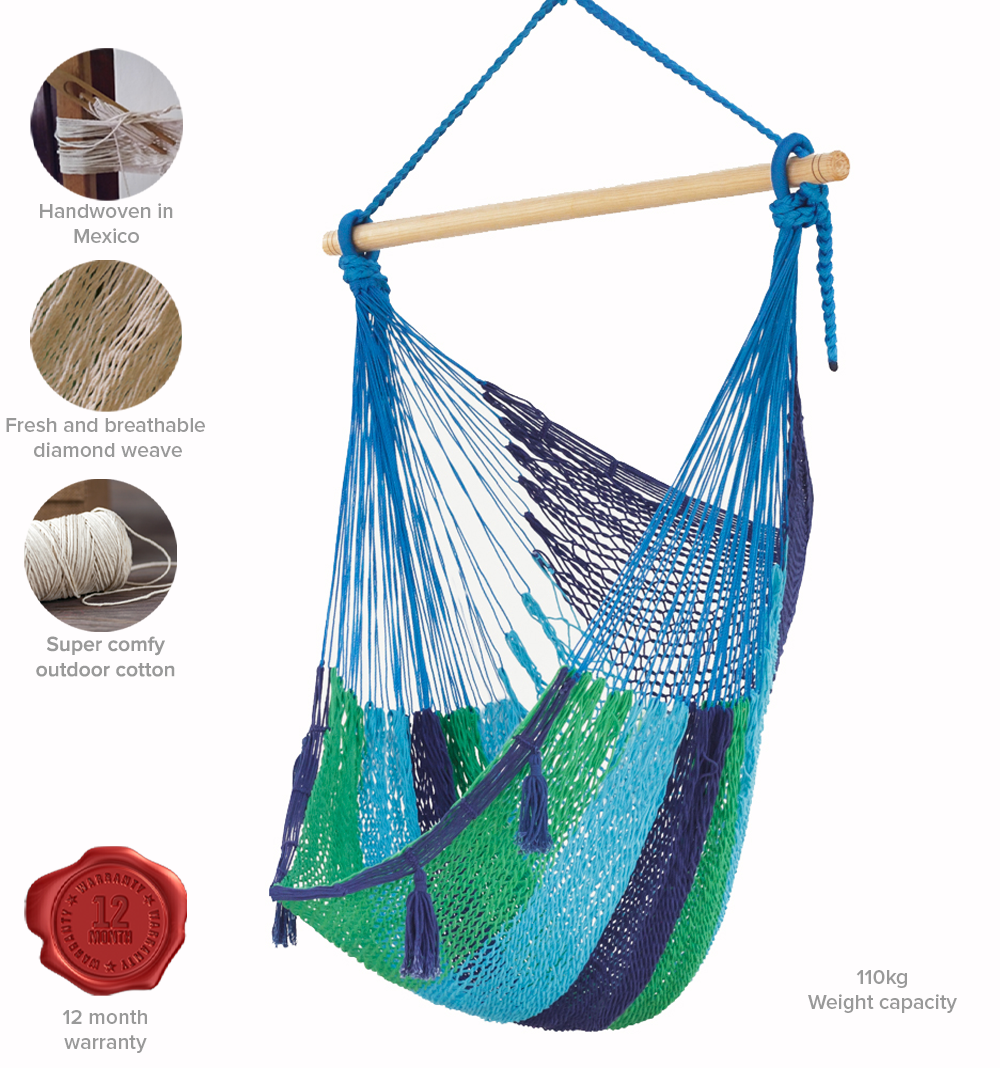
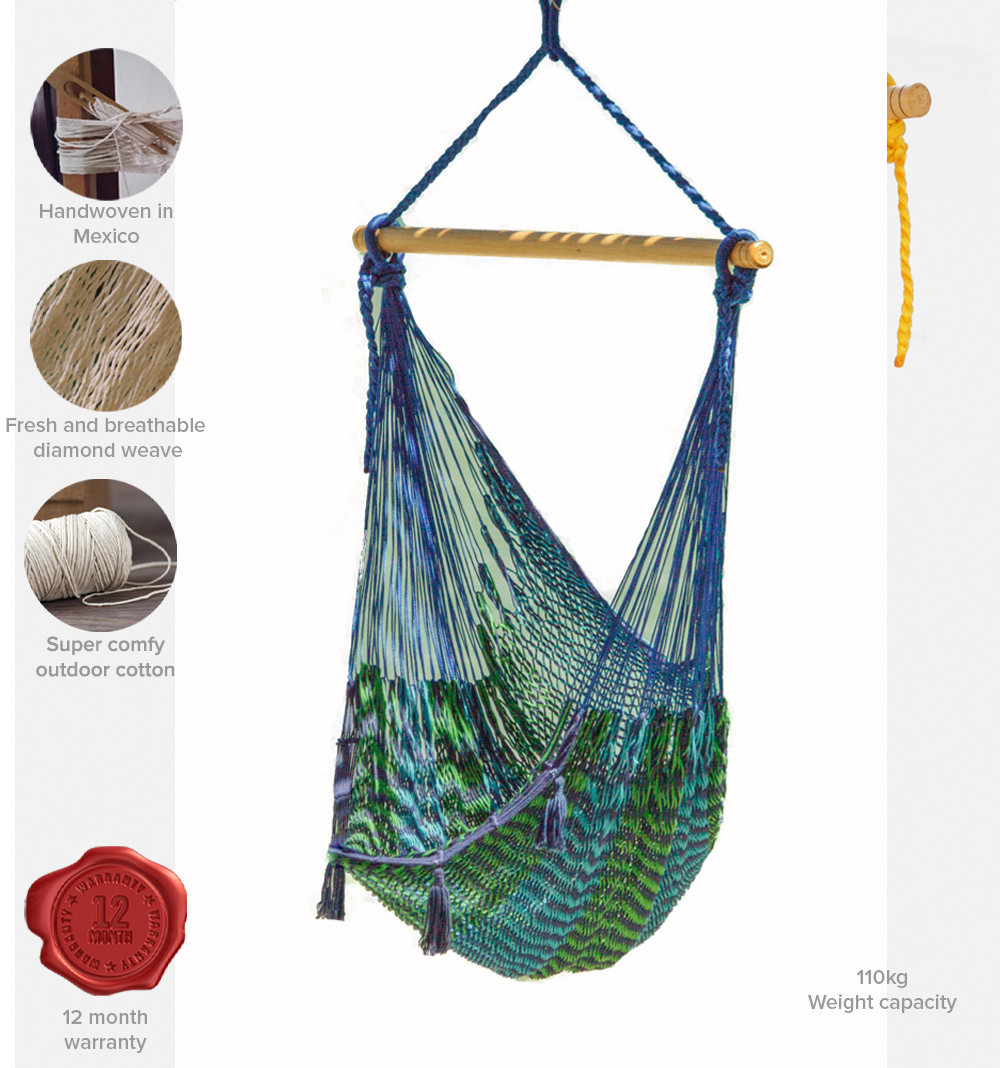
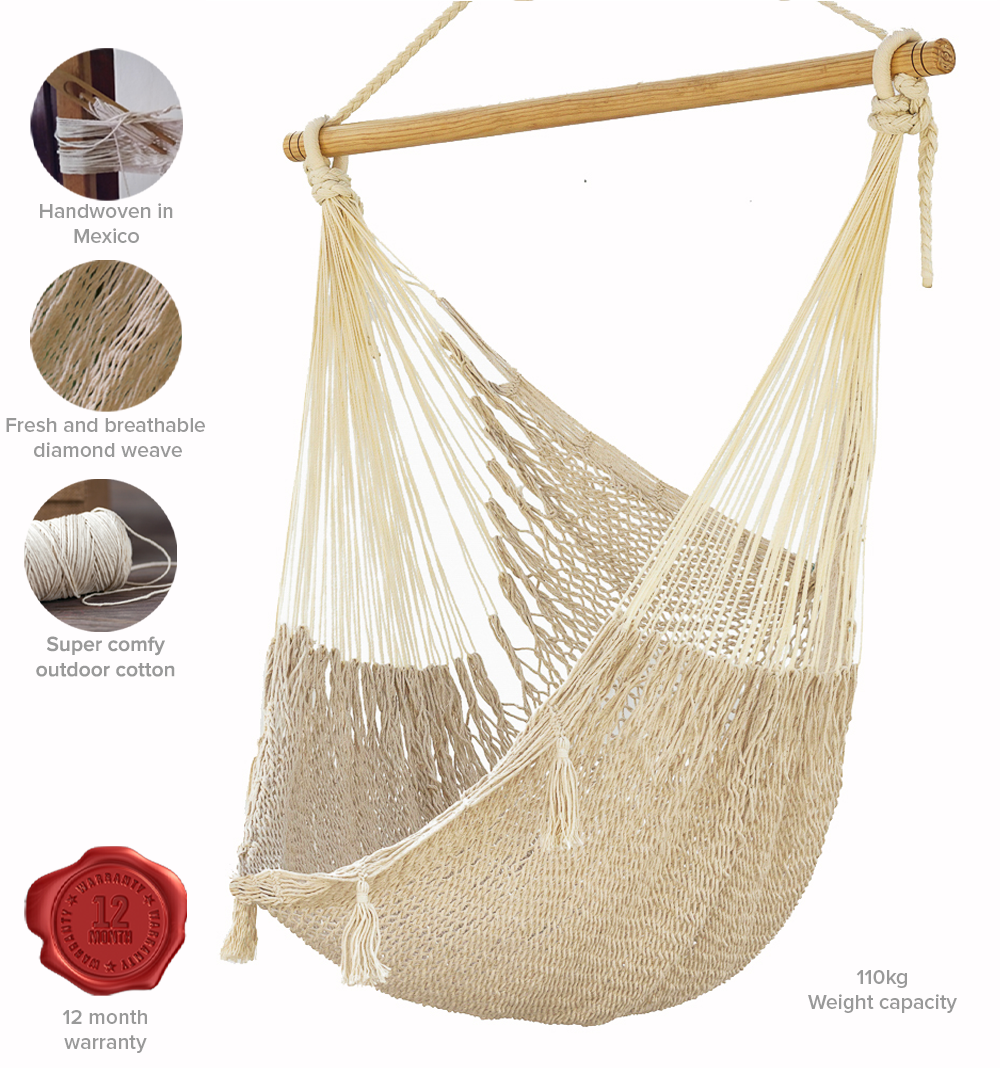
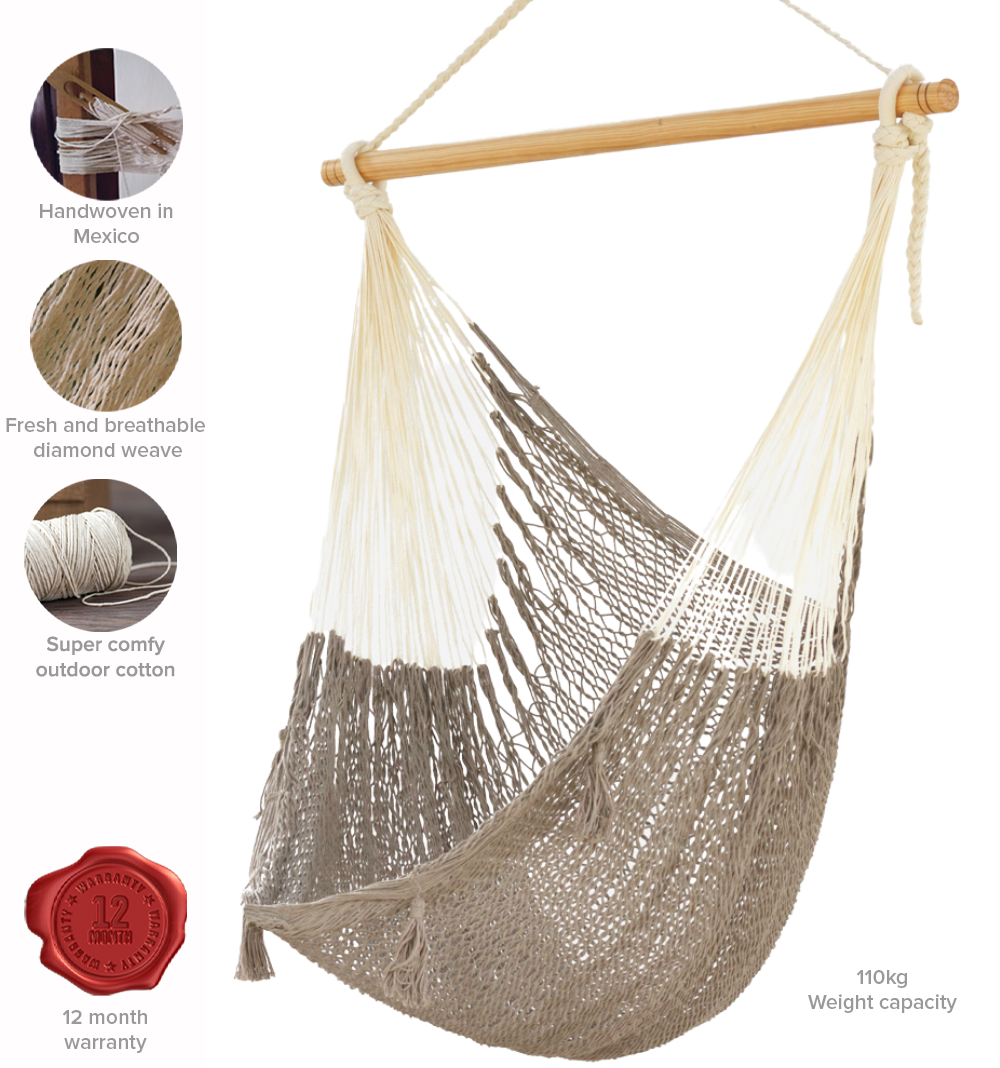
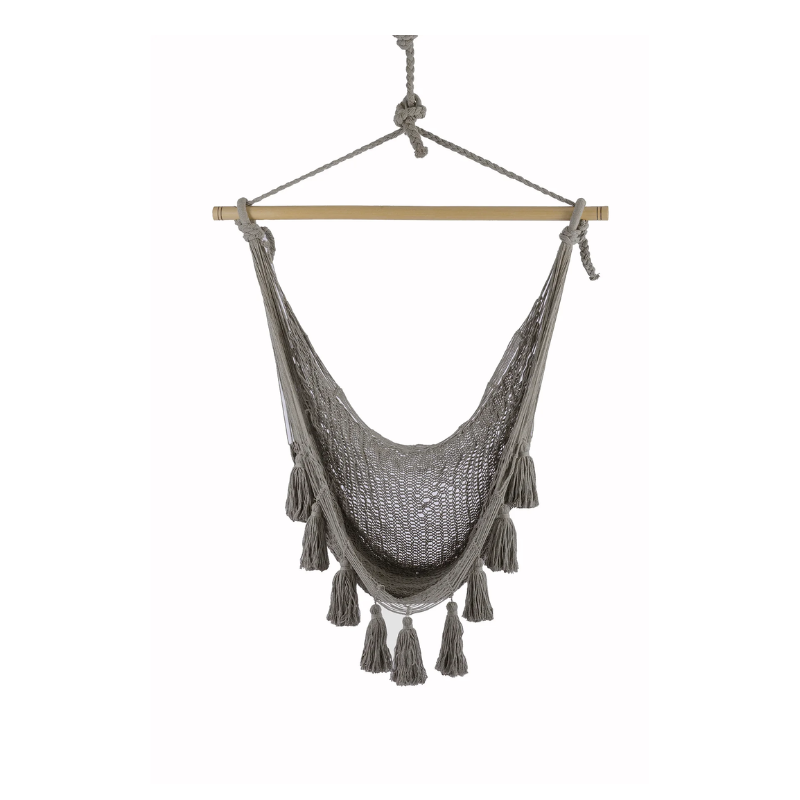
A hammock chair hangs from a single point, ceiling beam, tree branch, or a freestanding stand, and holds you in a reclined, slightly wrapped position. Unlike a flat hammock that requires two anchor points spread apart, a chair needs just one fixing point and takes up a much smaller footprint. That's why they work well on balconies, in bedrooms, and in smaller outdoor areas where a full hammock wouldn't fit.
We stock rope, canvas, macramé, and padded styles. The right one depends mostly on where you're putting it and how long you plan to sit in it at a stretch.
Which style suits your situation
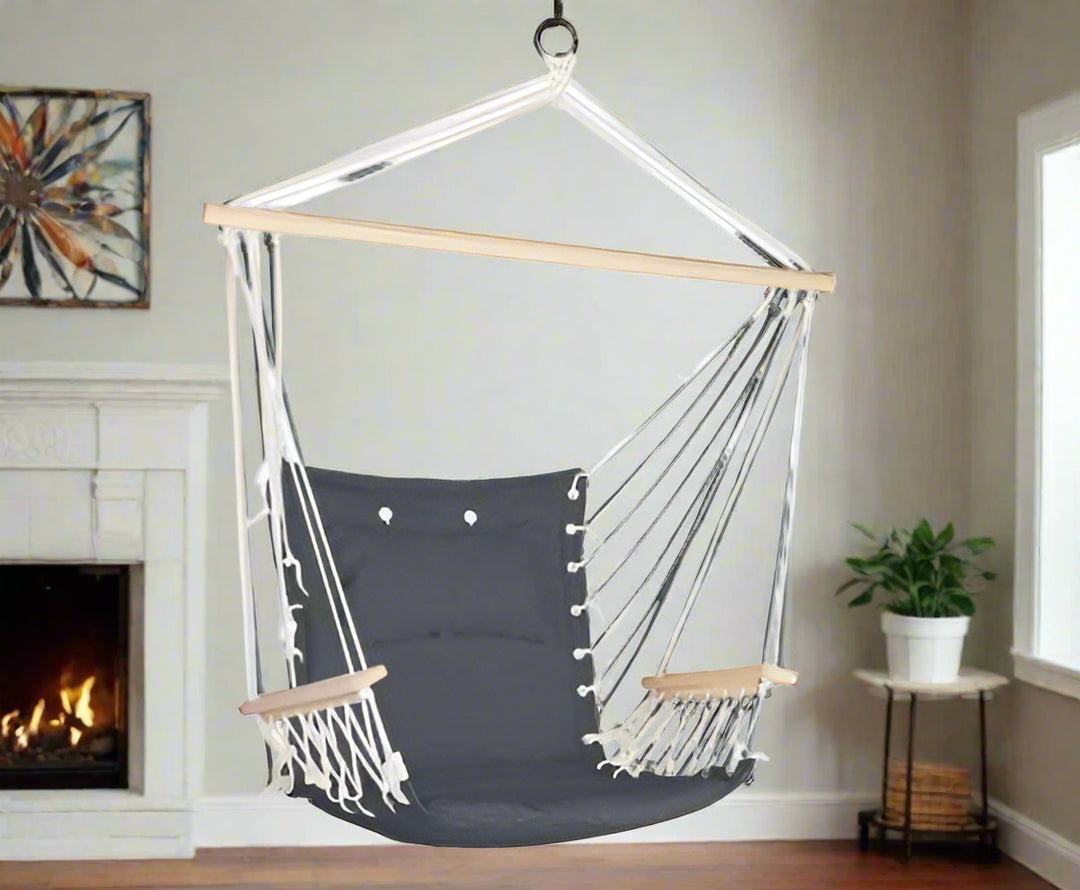
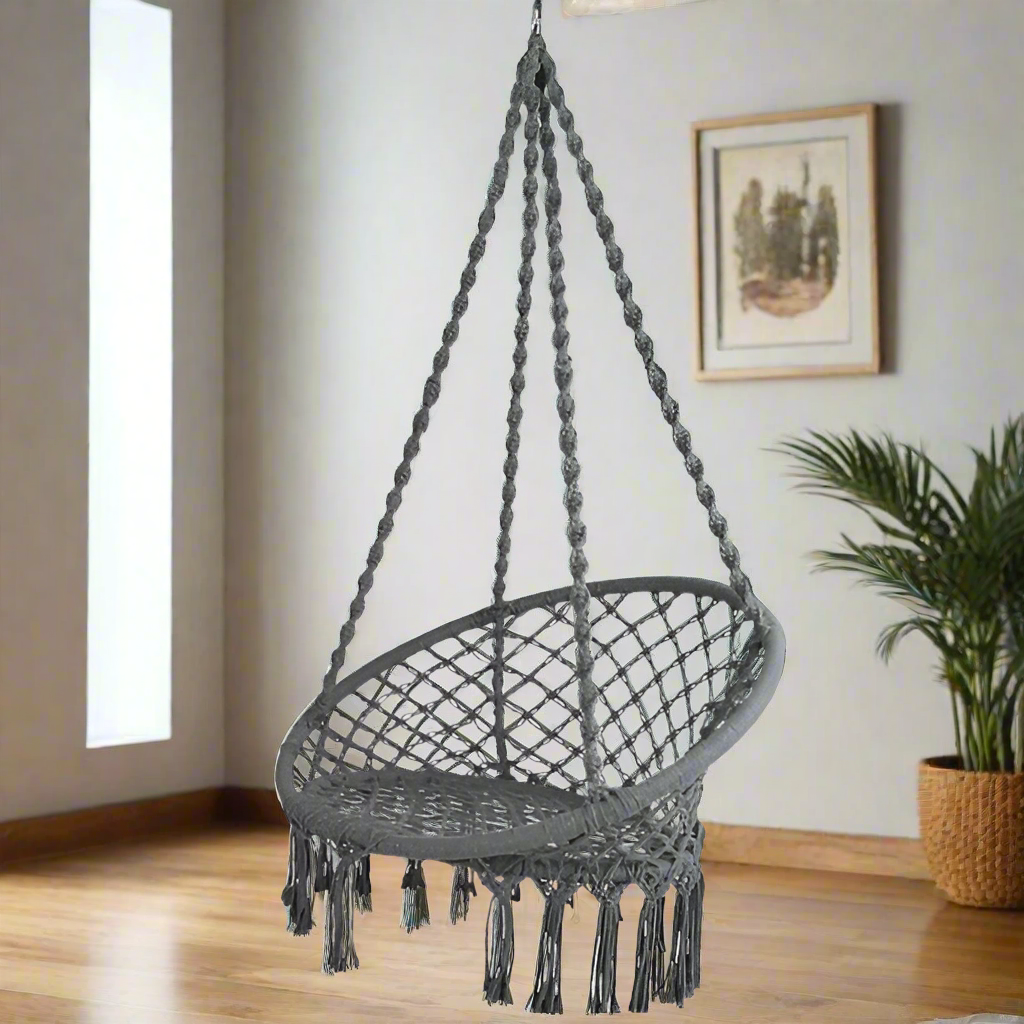
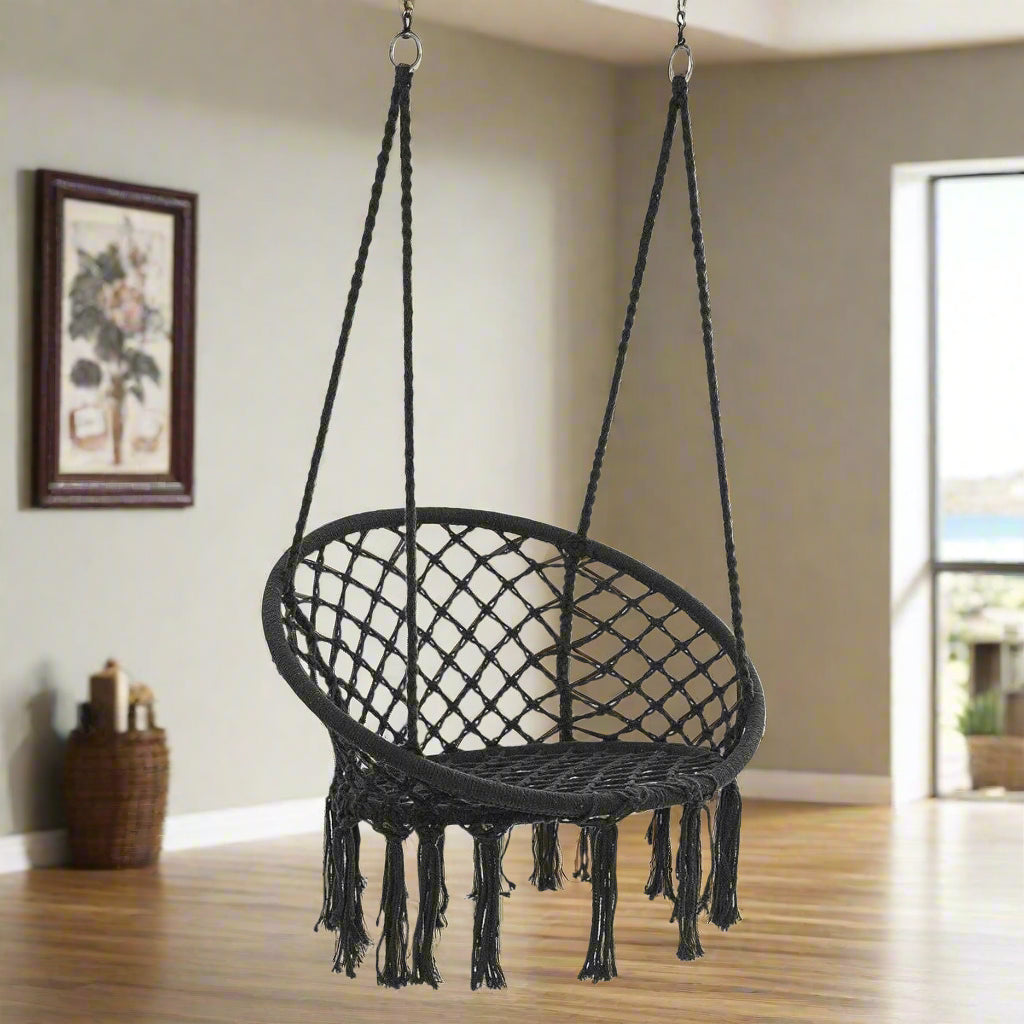
The material affects both comfort and how well the chair holds up outdoors. Here's how the main styles compare:
| Style | Material | Comfort for long sits | Outdoor suitability |
|---|---|---|---|
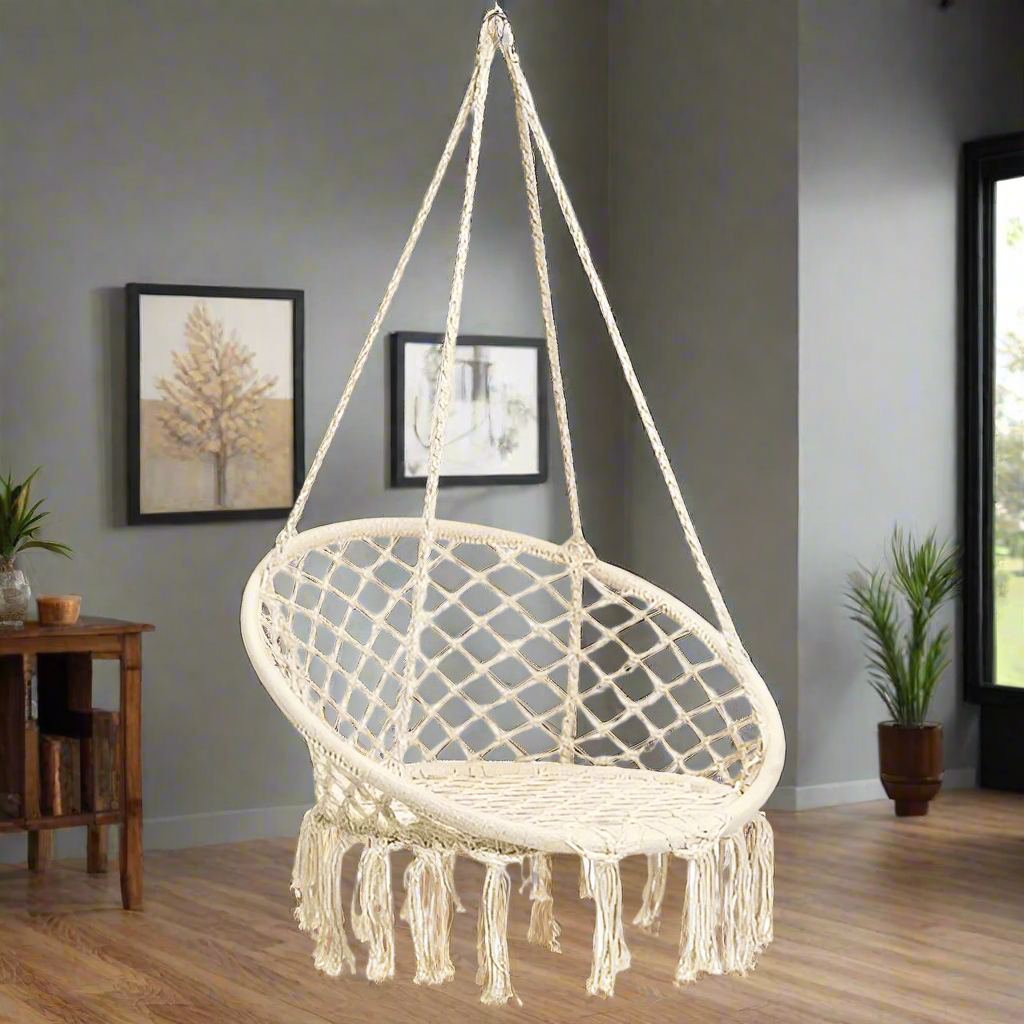
| Macramé / rope | Cotton or polyester-cotton blend | Good for 30–60 min; rope can mark skin in hot weather | Cotton fades and weakens in prolonged UV, best in covered areas or indoors |
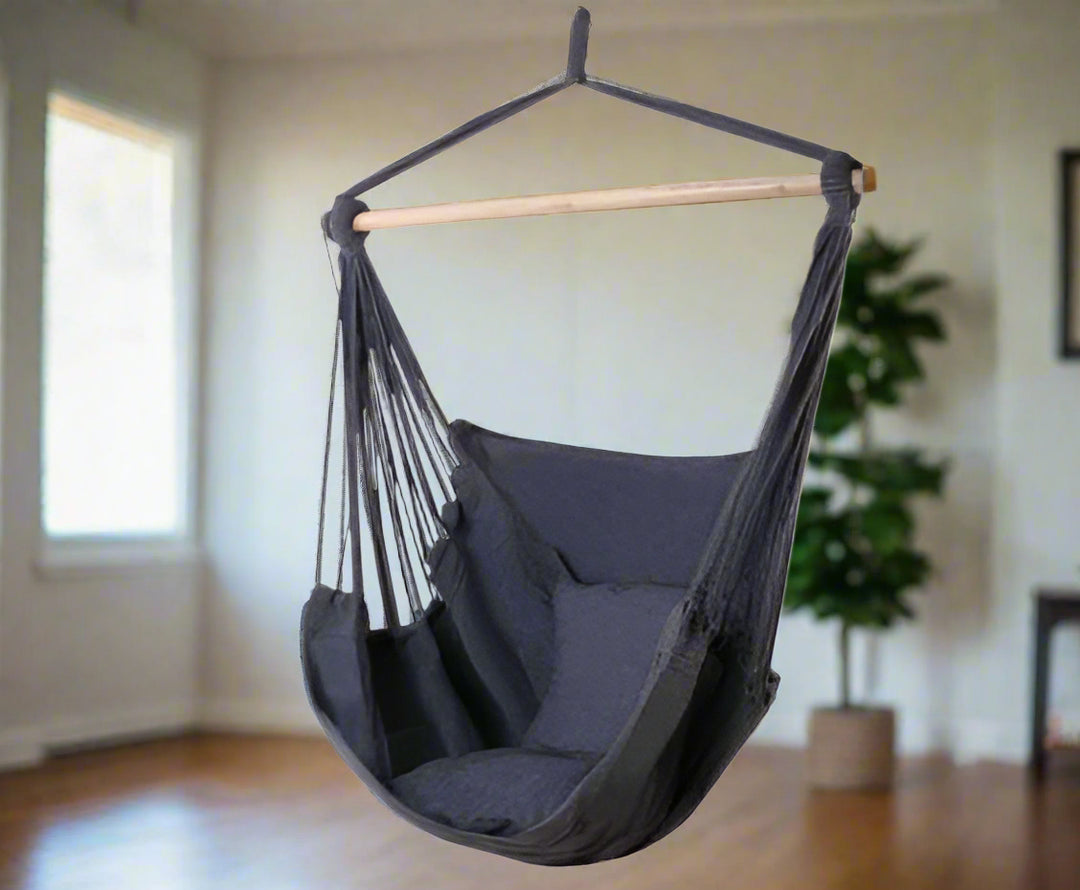
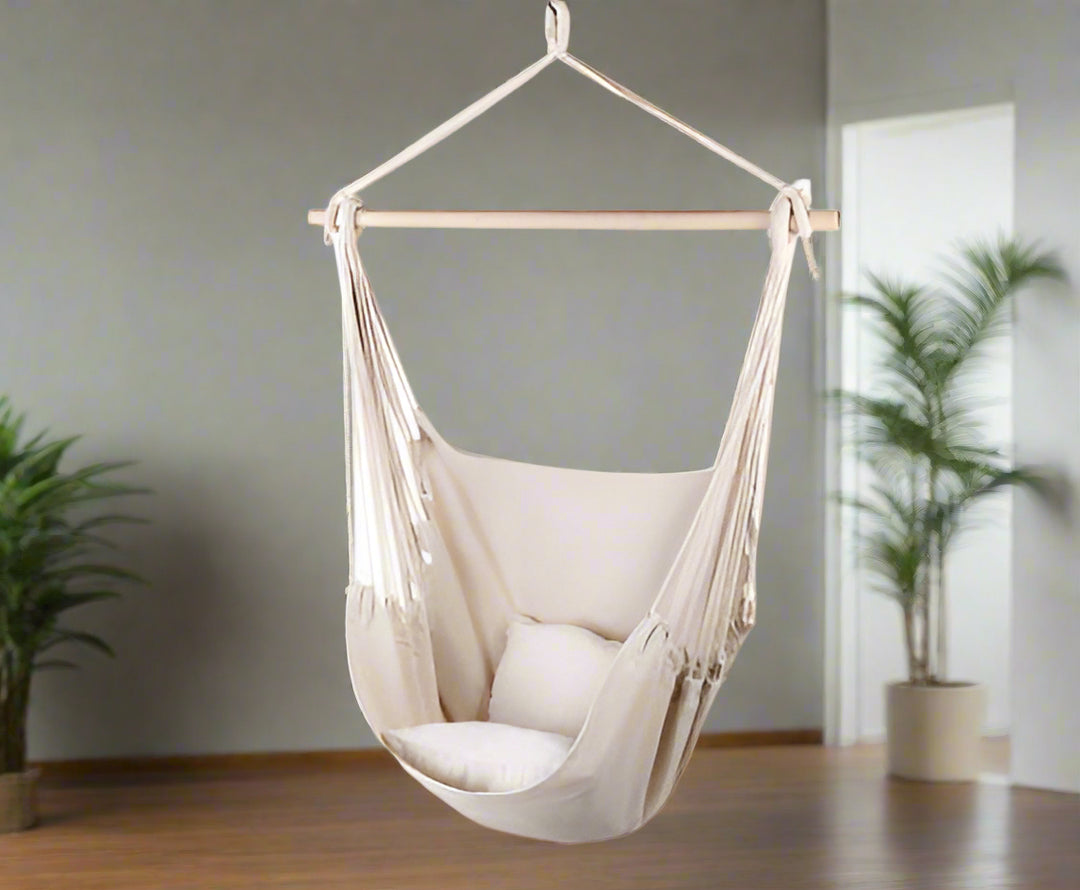
| Canvas / padded | Heavy canvas with foam or batting inside | Most comfortable for extended sitting; back stays supported | Bring inside if rain is likely, canvas holds moisture and can mould if not dried properly |
| Polyester / synthetic rope | UV-treated polyester | Firm, breathable in heat; less cushioned than canvas | Best choice for permanent outdoor setups — resists fading and dries quickly after rain |
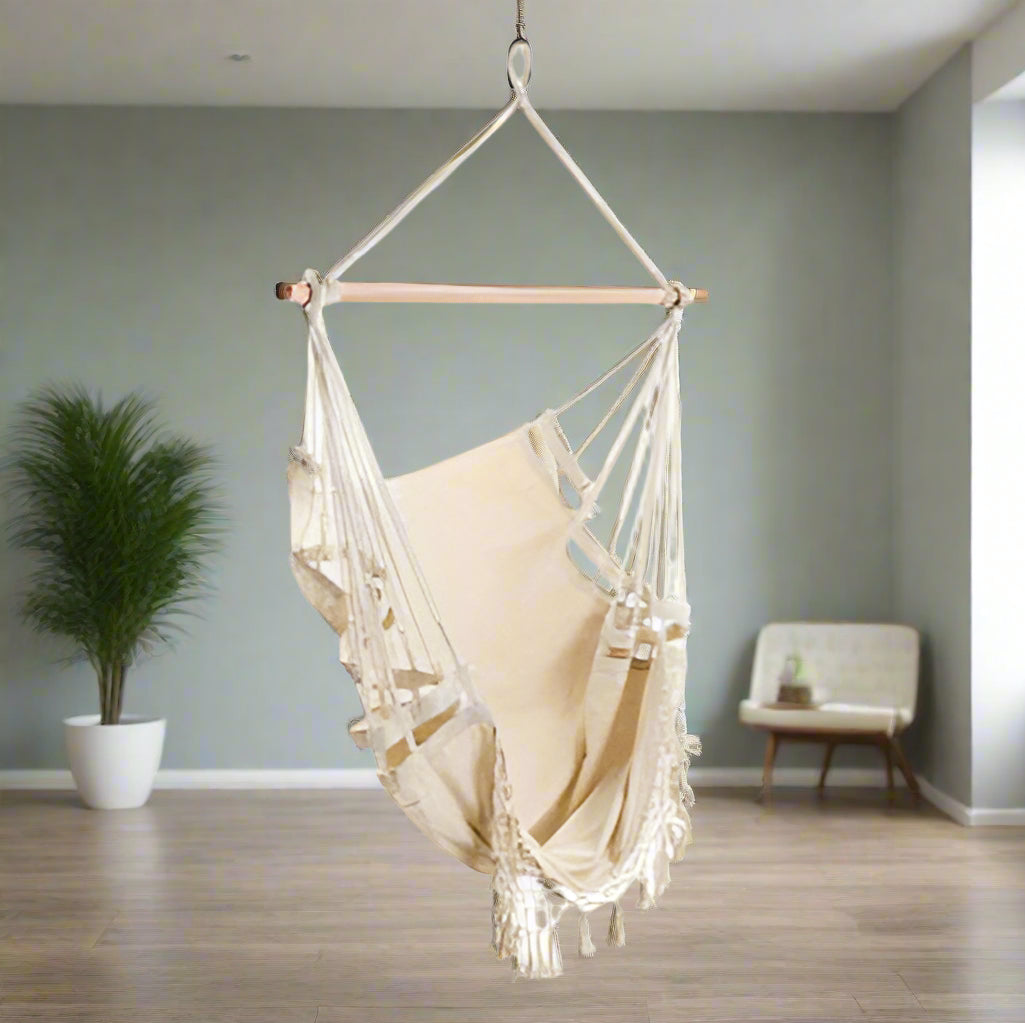
| Woven cotton (Mexican / Brazilian style) | Tightly woven cotton threads | Moulds to the body well; comfortable for longer periods than open rope | Indoor or covered outdoor only, raw cotton degrades quickly in Australian sun |
If you're putting the chair on an exposed deck in Queensland or coastal NSW, synthetic rope or treated polyester is the practical choice. Cotton and macramé look better indoors but won't last a full summer season outside without fading and weakening.
Hanging from the ceiling vs. using a stand
This is the first question most people get stuck on. Both work well — the right answer depends on your situation rather than one being objectively better.
Ceiling or beam mount
Needs a structural timber beam, concrete ceiling anchor, or a branch rated for dynamic load (not just static weight, when someone sits and swings, the load increases). For a 90 kg person, the fixing point should be rated for at least 200 kg to account for that dynamic load. Standard plasterboard ceilings without a beam behind them are not suitable without specialist anchoring.
The hardware matters as much as the fixing point. Use a swivel and carabiner rated for the weight — this lets the chair spin freely without the rope twisting and weakening over time. We stock swivels and carabiners and ceiling mount kits separately if you need them.
Freestanding stand
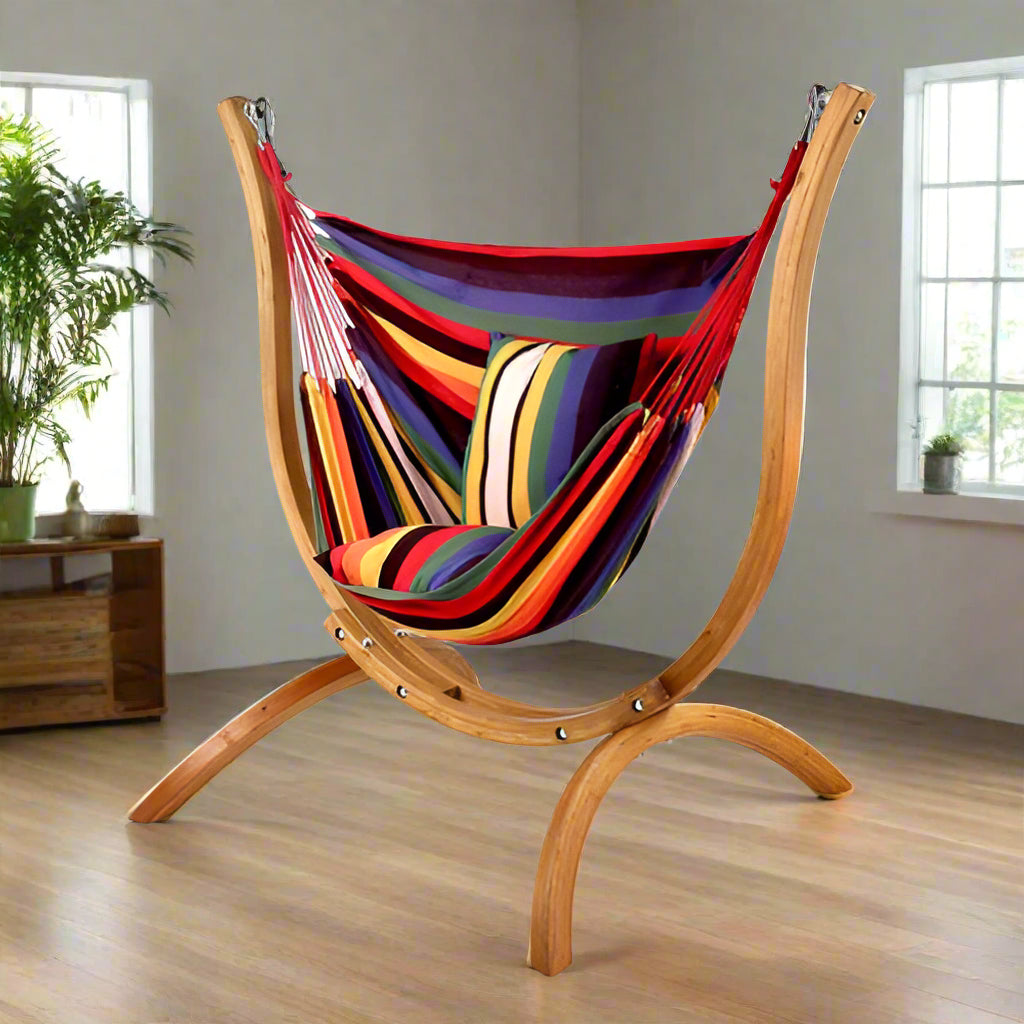
The stand option suits renters, anyone without a suitable beam, or people who want to move the chair between rooms or inside and outside. Most of our stands are steel and rated for 150–200 kg. The tradeoff is floor space — a stand typically adds 60–80 cm around the chair on each side for the base legs. On a small balcony that can be the deciding factor.
If you're buying a chair and stand together, check the stand is designed for a single-point hanging chair rather than a flat hammock — the attachment geometry is different. Our hammock chair stands are listed separately and specify which chair types they're compatible with.
Weight capacity
Our standard hammock chairs are rated at 100–120 kg for the chair itself. The ceiling or branch fixing point and hardware need to be rated significantly higher — as a general guide, at least double the maximum user weight, because dynamic load from sitting, spinning, and movement can briefly exceed the static weight.
For heavier users or anyone wanting more headroom, we carry heavy-duty models and frames rated to 150 kg and above. The weight rating is listed on each product page.
One thing worth checking: some cheaper chairs sold online list a weight capacity that applies only to the chair fabric, not the hanging hardware included. Our weight ratings cover the complete setup as sold.
Indoor vs. outdoor: a practical summary
Indoors: Cotton, macramé, and woven styles are all suitable. They feel better against skin for long periods and tend to look better in a home setting. Keep them away from direct sunlight through windows if you want the colour to last.
Outdoors, covered area: Canvas and cotton are fine if they're under a roof and can dry out fully between uses. A chair cover helps when it's not in use.
Outdoors, exposed: UV-treated polyester or synthetic rope only. Everything else will fade and weaken within a season in Australian sun. Even then, bringing cushions inside during heavy rain extends their life significantly.
Common Questions For Hammock Chairs
How long does shipping take?
Orders are typically processed within 1–2 business days.
While we prioritize fast dispatch across Australia, shipping to regions outside the East Coast metropolitan zones takes a little extra time. For deliveries to Western Australia, South Australia, the Northern Territory, and Tasmania, you can generally expect your order to arrive within 3 to 5 business days.
If you are located in a more remote or regional area within these states, please allow up to 7 to 10 business days for your items to reach you.
What is your return policy?
We accept returns within 30 days of delivery on unused items in original condition. To start a return, contact our support team and we’ll guide you through the process.
Can I change or cancel my order?
If your order hasn’t shipped yet, we’ll do our best to accommodate changes or cancellations. Reach out to our support team as soon as possible for assistance.
How do I hang a hammock chair?
What weight can a hammock chair hold?
What is the difference between a macramé and a rope hammock chair?
How do I choose the right style for my family?
What is the weight limit for a hammock chair?
Let customers speak for us

Comfortable cushion, great service!
I ordered a new cushion for my very old and tired egg chair. I was delighted the cushion turned up in only 3 or 4 days, and it looks great. Perfect timing for spring - I can now retire to my comfortable chair with my book in the sunshine. Very pleased!

Hideout hanging tent
My son absolutely loves his hanging tent, he is in there all the time, and it has been a great space for sensory regulation.

Sensory swing with stand
Extremely happy with the sensory swing and stand that we ordered through siesta hammocks, it’s great quality and very durable. My son loves it!

Great hammock and fantastic delivery
I have struggled to find hammocks long enough to fit between my two veranda columns. These are perfect, longer than most, well made and bloody comfortable 😂
Delivery was within two days and I ordered on a Sunday AAA+++ rating on all aspects.
PS the dog loves it too 🍻

Excellent
Very happy with this product. Thank you
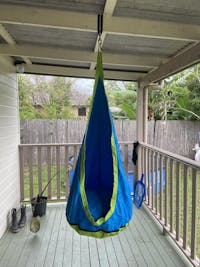
Great little pod
easily hung and amazing materials very durable . Kids love spinning and swinging in it.

Amazing!!
I bought this hammock chair with the frame and absolutely love it! It is great on my balcony, and I spend many hours reading my book in it. Absolutely love it!! Super comfy, roomy and my new chill out zone at home ❤️

Love this place good customer service
Love this place good customer service always answers my emails back straight away and always been so helpful I've bort like 5 things thru them my son loves it thanks guys will be getting more stuff soon!

Pod chair cushion
Product was delivered as described and in a timely manner. Very happy,

Great
Delivered on time..great prices and good quality hammocks.

Egg chair cushions
Bought two cushions in black they look amazing and are very comfortable highly recommended

Therapy Sensory Swing with Hammock Chair Stand
Wonderful
Great colour. Comfortable.

excellent service
the first time I have dealt with this company and more than pleased with the absolute professional service. I will be a return customer

Ooh, such a comfortable hammock.
I have moved on to permanent hammock sleeping, and for the how weather this fabulous. I do occasionally get my toes caught in the holes, but hey, small price to pay for such deliciousness.