


A hammock stand is the frame that holds your hammock when you have no trees or fixings. Choosing the wrong one is easy to do, because the stand and the hammock are often sold separately. This guide explains how to match them: length, material, weight capacity and where you plan to put it. The specs come from our hammock stands, which are frames only, with no hammock included.
Stand, Freestanding Set or Chair Stand
Before you pick a size, pick a type.
A hammock stand holds a standard hammock between two ends. Use it if you already own a hammock or want to choose your own.
A freestanding hammock set includes the hammock and the stand together, so they are matched for you. Browse our full range of hammocks to see the sets.
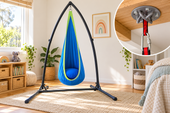
A chair stand holds a hammock chair or a swing from a single point. It is a different frame from a lying hammock stand, so do not mix them up. See our hammock chairs for the chairs these stands carry.
The Stands in Our Range
The collection holds 11 products across four types: hammock chair stands, hammock stands, a sensory swing stand and a wooden hammock stand. Examples:
| Stand | Type | Notes |
|---|---|---|
| 305 cm Universal Steel Hammock Stand | Steel hammock stand | Shortest in the universal range |
| Universal Steel Hammock Stand (2.8 m) | Steel hammock stand | Compact steel option |
| 375 cm Universal Steel Hammock Stand | Steel hammock stand | Mid length |
| 457 cm Universal Steel Hammock Stand | Steel hammock stand | Longest in the range |
| 136 Kgs Lightweight Hammock Stand | Steel hammock stand | Rated 136 kg |
| Wooden Hammock Stand | Wooden hammock stand | Treated timber |
| Steel Hammock Chair Stand | Chair stand | Single-person |
| Double Hammock Chair Stand, 200 kg | Chair stand | Two-person, heavy duty |
| A Frame Heavy Duty Steel Hammock Chair Frame | Chair stand | A-frame design |
| Cross Base Steel Hammock Chair Stand | Chair stand | Cross base |
Sizing: Match the Stand to the Hammock
Length is the most common mistake. Our listings advise you to measure the total length of your hammock from loop to loop and compare it with the frame’s specification before you buy.

Two points follow from this.
Standard hammocks without bars usually suit our adjustable universal steel stands.
Hammocks with a wooden spreader bar are often longer to hang, and our stand guidance says you will likely need a longer frame. If you own a spreader bar hammock, measure first and choose the longer stands, such as the 375 cm or 457 cm models.
The stands are named by length, so use the number in the title as your starting point, and read each listing for the hammock lengths it suits. If you are between two lengths, the longer stand gives you more room to adjust the hang, while a shorter one suits a tight space. Ask us if you are not sure.
Steel or Wooden Stand
Powder-coated steel stands are lighter, portable and easy to set up. Our listings describe a tool-free snap-lock design for the universal steel stands. They suit renters, balconies and people who like to move the hammock around.
Wooden stands are made from treated timber and look more like a feature. They are heavier, need basic assembly and suit a permanent spot on a deck or in the garden.
| Spec | Steel | Wood |
|---|---|---|
| Weight | Lighter | Heavier |
| Assembly | Tool-free snap-lock on universal models | Basic assembly with included hardware |
| Portability | Easy to move | Better kept in one place |
| Look | Modern | Traditional |
| Best for | Renters, balconies, movable setups | Permanent deck or garden spot |
Weight Capacity
The capacities in the collection group into three bands: up to 100 kg, up to 200 kg and about 204 kg. The collection page notes that most standard double frames carry up to 200 kg, and the listing for each stand shows its exact rating.
The rating is for the frame. The hammock, the carabiners and the ropes each have their own rating, and the lowest of them sets your limit. If two adults will use the hammock, check that both the frame and the hammock are rated for the combined weight. Our guide on hammock weight limits explains how to read the numbers.
Where Will It Stand
On grass or soil: check the feet do not sink in. A flat, firm area works best.
On a deck or paving: make sure the surface is level and the feet will not slide.
Indoors: measure the full footprint, including the space the hammock swings through.
On a balcony: check the floor space and any building rules about weight and furniture.
Our listings say the steel and treated-timber stands are built for the Australian outdoors, but that they last longer under a patio or with a cover in harsh winters or extreme wet weather.
Assembly and Setup
Universal steel stands use a snap-lock design with clear instructions. Wooden frames come with the hardware and written instructions.
- Choose a flat, level spot.
- Assemble the frame as the instructions say.
- Check every join and fitting.
- Hang the hammock and check the hang angle and the seat height.
- Sit in it carefully and look for movement in the frame.
- Recheck the fittings after the first week.
Reading the Names and Numbers
Stand titles carry their key spec, so learn to read them. A number with cm or m, such as 305 cm, 375 cm, 457 cm or 2.8 m, is the stand’s length. A number with kg, such as 136 kg or 200 kg, is the weight rating. Words such as Universal tell you the stand is adjustable for a range of hammocks, and words such as Chair, A Frame or Cross Base tell you it is for a single-point hang.
Always open the listing, because a title cannot give you everything. Check the included hardware, the assembly steps and the stated capacity.
How to Measure Your Space

- Measure the hammock from loop to loop, with the hammock laid out flat.
- Note the length of the stand you are considering, and compare the two.
- Mark the footprint on the ground with tape, including the legs and the space a person needs to get in.
- Check the height if you are going under a roof or a pergola.
- Add swing room. A loaded hammock moves, so leave open space on each side.
- Check the route the stand will take to its spot, since long frames are awkward to carry through narrow gates.
Setting Up Indoors
A stand is a good way to use a hammock inside without drilling. Steel stands are lighter and move more easily, and many people choose them for a bedroom or a spare room. Measure the full footprint, check the ceiling height if the hammock will swing high, and place felt pads or a rug under the feet to protect the floor. Keep the area around the hammock clear of furniture and anything hard.
Care and Maintenance
Steel: wipe the frame with a damp cloth, and touch up chips in the powder coating early. Dry it before you store it, because bare steel can rust if the coating is damaged.
Wood: treated timber still benefits from care. Check the finish each season and re-treat it if it looks dull or worn.
Fittings: check bolts and snap-locks regularly, and tighten any that have worked loose.
Cover: a cover keeps weather off in harsh seasons and keeps leaves and dust away.
Storage: if you have room, take a steel stand apart for winter and store it dry. Keep timber off damp ground, and keep the bolts and small parts together in a labelled bag so nothing is lost before next season.
Which Stand Suits You
You rent or move house often: a steel universal stand, which is lighter and easier to take with you.
You want a feature for your deck: a wooden stand, which suits a permanent spot.
You have a spreader bar hammock: a longer steel frame, after you measure.
You want to hang a chair or a swing: a chair stand or a swing stand, not a hammock stand.
You want the simplest option: a freestanding set, where the stand and hammock are already matched.
Stand, Trees or Ceiling: How They Compare
| Spec | Stand | Trees and straps | Ceiling fixings |
|---|---|---|---|
| Drilling | None | None | Required |
| Moveable | Yes | No | No |
| Floor space | Needs room for the frame | None | None |
| Best for | Renters, decks, lawns without trees | Gardens with strong trees | Indoor hammocks, home owners |
| Check | Length, rating and a level base | The trees and strap rating | The ceiling structure |
If you have two strong living trees the right distance apart, our tree straps may be all you need. If not, a stand gives you the same hang anywhere.
Staying Safe on a Stand
A stand is only as steady as the ground under it. Set it on level, firm ground and check it does not rock. Sit in the hammock slowly the first time, with your feet on the floor, and add weight gradually. Do not let more people use it than the rating allows, and do not stand in the hammock. Tighten the fittings after the first week, and check them regularly after that.
Children and pets should not climb on the frame. If the frame moves, lifts or leans when someone gets in, stop using it and check the base and the joints.
Common Mistakes When Buying a Stand
Ignoring the hammock length. Measure loop to loop before you buy.
Forgetting the spreader bar. Bar hammocks need longer frames.
Mixing chair stands and hammock stands. They are built for different hangs.
Not checking the combined weight. Count every person who will use it.
Choosing wood for a spot you want to move. A wooden stand suits a fixed place.
Leaving it uncovered in storms. A cover helps any frame last longer.
Frequently Asked Questions
Does a hammock stand come with a hammock? No. The stands in this collection are frames only. If you want a complete set, look at our freestanding hammocks.
Will my hammock fit your stand? Our adjustable universal steel stands suit a wide range of standard hammocks. Measure your hammock from loop to loop and compare it with the frame. Spreader bar hammocks usually need a longer frame.
Can I leave a stand outside all year? Both the powder-coated steel and the treated timber stands are made for outdoor use. They last longer under a patio or with a cover in harsh or very wet weather.
What weight can a hammock stand hold? It varies by model. Most standard double frames are rated up to 200 kg, and the exact rating is on each listing.
Is a steel or wooden stand better? Steel is lighter and easier to move. Wood is heavier and suits a permanent spot.
Do I need tools to assemble a stand? Universal steel stands use a tool-free snap-lock design. Wooden frames need basic assembly with the included hardware.
Read next




Leave a comment