


An outdoor relaxation corner is a small spot you want to sit in, set up so that sitting there takes no effort. It can be a hammock in the shade, a hammock chair on a balcony or a lounger beside the pool. This guide covers how to choose the spot, what to put in it and how to keep it comfortable through the year, with specs from our hammocks, hammock chairs and outdoor lounge chairs.
Start with the Spot
The best corner is one you will actually use. Walk around your space and look for these five things.
- Shade. Afternoon sun in an Australian summer is strong. A tree, a verandah or a shade sail makes a spot usable for far more of the day.
- Shelter. A wall or hedge cuts the wind. A roof keeps rain off.
- Privacy. A screen of plants or a fence makes it feel like a retreat.
- Distance. A spot close to the house gets used. One at the back of the yard often does not.
- Level ground. Stands, loungers and chairs all need a flat surface.
Choose Your Main Seat
Pick one main seat first, and build the corner around it.
| Seat | Space it needs | Best for | Example spec |
|---|---|---|---|
| Hammock between trees | Two strong trees 3 to 4 m apart | Lying back | Straps rated to 200 kg |
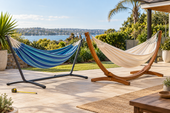
| Hammock on a stand | A flat area for the frame | Yards with no trees | Stands from 100 kg up to about 204 kg |
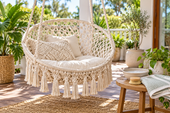
| Hammock chair | One strong fixing point or a chair stand | Balconies, small patios | Tassels: 120 kg |
| Egg chair | Floor space for the frame | Covered decks | Outdoor Porch model: 150 kg |
| Sun lounger | A clear patch of deck or paving | Poolside, sunbathing | Dockside: 170 × 69 × 83 cm, 150 kg |
| Deck chair | A small foldable footprint | Occasional use, tight spaces | Beige timber deck chair: 120 kg |

You can read more about the individual chairs in our guides to choosing a hammock chair and the best outdoor lounge chairs.
Five Setups to Copy
1. The balcony nook. A hammock chair on a chair stand, a small table and a pot or two. Measure the floor and the ceiling height, and choose a stand if the building does not allow fixings.
2. The shaded yard hammock. Two living trees, wide straps and a hammock hung at about 30 degrees. Add a rug underneath and a hook for a book or a drink.
3. The covered-deck pair. An egg chair and a side table. The Outdoor Porch model has a frame of 116 by 105 cm and is 200 cm tall, so check the roof height.
4. The poolside lounge. A sun lounger like the Dockside, with a small table for a drink and a towel rack close by. Aluminium suits wet and salty spots.
5. The flexible corner. A steel stand you can move, with a hammock or a chair, so the setup changes with the season.
Layout Tips
Leave space around the seat. A hammock or chair swings, and a lounger needs room to recline and to walk past. Keep paths clear, and keep hard edges, pots and furniture out of the swing area.
Put a small table within arm’s reach, since you will use it more than you expect. Place the seat so that the best view is in front of you, whether that is the garden, a tree or the sky.
Comfort Details
Cushions and throws. Firm seats such as rope or wicker are better with a cushion. Store cushions out of the rain.
Shade. A shade sail, an umbrella or a pergola extends the hours you can sit out.
A rug. It defines the corner and softens bare ground under a hammock stand.
Lighting. Soft lights around the corner make it usable in the evening. Check the rating for outdoor use.
Plants. Pots give privacy and a sense of place, and they cost little.
Materials for Australian Conditions
Match each piece to the weather it will see.
Aluminium frames do not rust and suit pool areas and coastal homes. Polyester and weather-resistant fabrics cope with sun and rain better than cotton. Cotton hammocks and chairs are best kept under cover. Resin wicker over a steel frame suits a covered patio. Timber needs care and does best under a roof.
Whatever you choose, read the listing for care notes, and use a cover when you are away.
Safety Basics
Hang hammocks and chairs from solid fixings that are rated above your weight, and check the whole chain: strap, carabiner, hook and frame. Put loungers and stands on level ground, and keep them clear of pool edges and steps. Check hardware regularly, and supervise children around any swinging seat.
Evening Use and Lighting
Many people use their corner after dark in summer, when the day has cooled. Soft, low lights make it comfortable without spoiling the mood. Solar string lights, lanterns and small outdoor lamps all work, and the key is to keep cords and glare away from the seat. Check that any electrical lighting is rated for outdoor use, and keep cables clear of the swing path and of places people walk.
Place lights so they do not shine into the eyes of someone lying back in a hammock. A lamp at the side or a string above and behind the seat is usually more comfortable than one in front.
Kids and Pets in the Corner
A relaxation corner will attract the rest of the household. Children and pets are often drawn to hammocks and swings. Agree some simple rules early: one person at a time unless the rating allows more, no standing or jumping, and an adult nearby for young children. Keep the weight limit in mind, since a child and a dog can add up quickly.
Pets can chew cord and scratch fabric, so keep an eye on the hammock and check it for damage. A rug or soft mat underneath makes jumping down easier on everyone.
What to Buy First
You do not need everything at once. Start with the one seat that suits your space, plus the hardware to hang or place it safely. Add a table and a cushion next. Shade, lighting and plants can follow as you see how you use the corner. This order spreads the cost, and it stops you buying pieces that do not fit the space once the main seat is in.
The Corner Through the Seasons
Summer: shade matters most. Move the seat to follow the shade, and keep cotton under cover when storms are forecast.
Autumn: leaves and dust build up. Wipe frames and check cushions.
Winter: bring cushions and fabric seats inside, or cover the frame. Add a throw if you still sit out.
Spring: check straps, hooks and bolts before the season starts, and clean the seat.
A short check at the change of each season keeps the corner safe and comfortable for years, and it only takes a few minutes.
Keeping the Corner Going
A corner that is easy to use stays in use. Wipe surfaces when you notice dust, bring cushions inside before rain, and check the straps and fixings each season. Move the seat if the sun shifts with the seasons. Change small things, such as a throw or a plant, to keep it fresh.
Frequently Asked Questions
What is the best seat for a small balcony? A hammock chair on a chair stand or from a solid overhead beam uses little floor. A deck chair that folds is another option.
Do I need trees for a hammock? No. A hammock stand gives you the same hang on any flat ground.
What suits a hot Australian backyard? Shade first. Then choose polyester or aluminium and mesh that handle sun, and keep cotton under cover.
How do I keep cushions dry? Store them under cover or bring them inside when rain is forecast.
How much space do I need? A sun lounger like the Dockside is 170 cm long and 69 cm wide, and an egg chair on a stand takes a frame of about 116 by 105 cm. Add room to move and to swing.
Read next


Leave a comment