
How to Build a Hammock Chair Stand – DIY Guide & Tips
Hammock Chair Stands — Hang Your Chair Anywhere, No Trees Required
A hammock chair stand lets you hang your chair wherever you want — in the backyard, on the deck, in the living room, or even at the beach — without needing trees, ceiling hooks, or a single drill hole. If you already own a hammock chair, or you're buying one separately, the right stand makes the whole setup portable and flexible.
This collection covers standalone stands designed to work with hammock chairs: steel single stands, double stands for two people, and lightweight tripod options. Browse by weight capacity, material, or intended use to find the right fit.
Already after a complete hammock and stand set? That's a different product — shop our hammock with stand bundles →
How to choose a hammock chair stand
Not all stands suit all chairs. Before you buy, check three things: weight capacity, chair compatibility, and where you plan to use it most.
Weight capacity
Most single-person hammock chair stands are rated between 100–120 kg. If two people will use it, or you want extra peace of mind, look for a double stand rated to 200 kg or more. The stand should always be rated higher than the heaviest person who will use it.
Chair compatibility
Most hammock chair stands use a single central hanging point and fit the majority of hammock chairs sold in Australia. If you're buying a chair and stand separately, check that the hanging height matches your chair's rope length. Most stands have adjustable chains or hooks to accommodate different lengths.
Indoor vs outdoor use
Steel stands with powder-coated finishes handle outdoor conditions well. For indoor use, wooden stands add a warmer aesthetic and suit living rooms or reading nooks. Portable tripod stands are the most versatile — light enough to move between rooms or take outdoors without any reassembly.
Steel, timber, or tripod — which material is right?
Steel hammock chair stands are the most popular choice in Australia. They're durable, weather-resistant when powder-coated, and require minimal maintenance. Most fold flat for storage. The trade-off is weight — steel stands are heavier than timber or tripod options, which limits how often you'll want to move them.
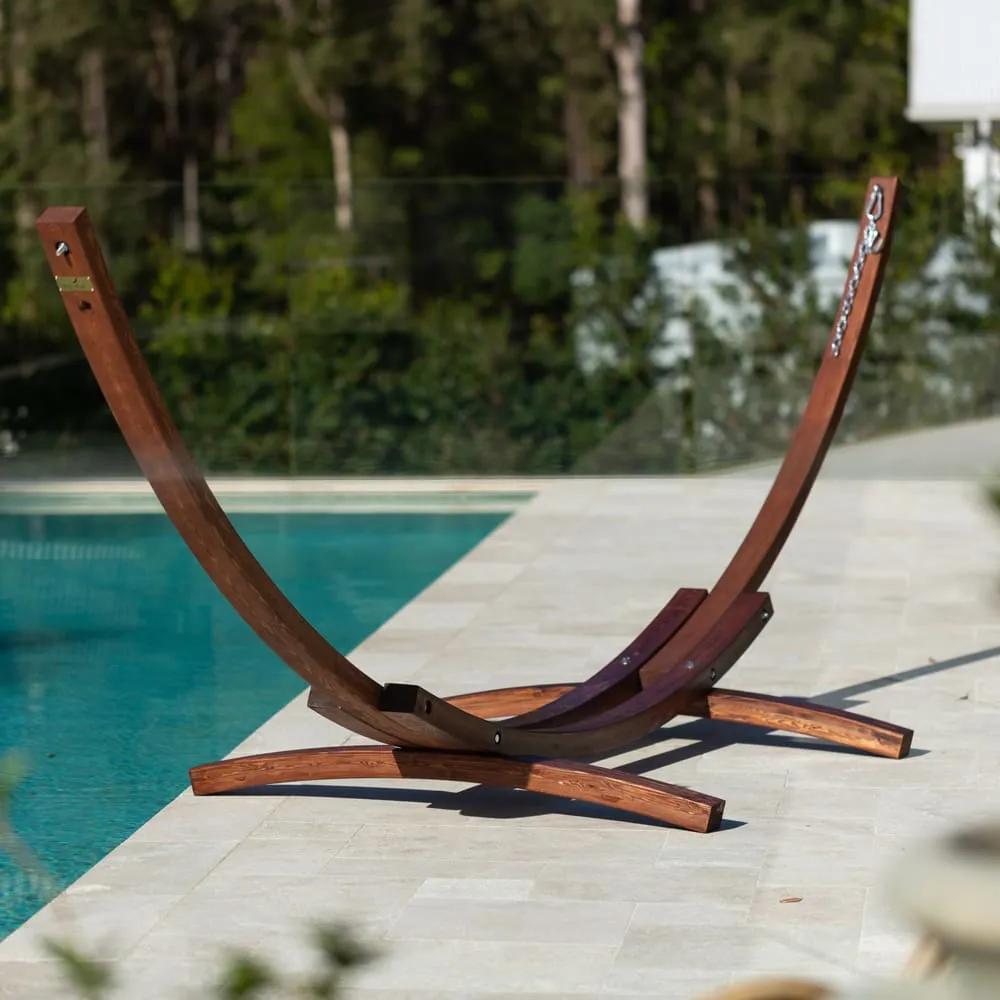
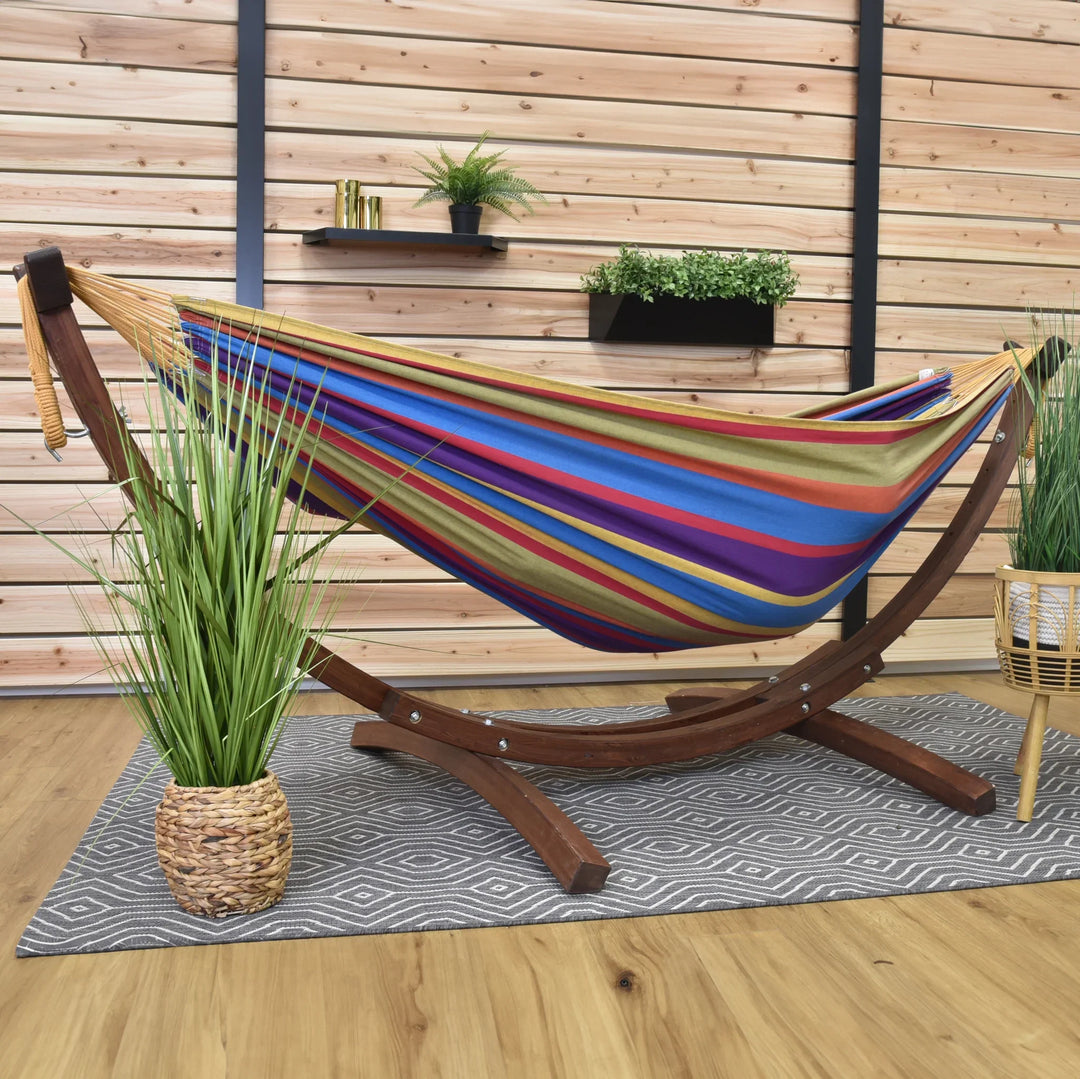
Timber hammock chair stands suit buyers who want something that looks at home in a garden or lounge. Hardwood stands add elegance but need periodic sealing or oiling to maintain their moisture resistance, especially in coastal or high-humidity areas. Bring timber indoors or cover it during winter to extend its lifespan.
Tripod stands are the go-to for portability. They pack down small, assemble without tools, and work indoors or out. They're particularly well-suited for sensory swings, children's hammock chairs, and anyone who wants to move the setup between rooms or locations frequently.
Can I use a hammock chair stand for a sensory swing?
Yes — a hammock chair stand is one of the most practical ways to hang a sensory swing without drilling into ceilings or walls. This is especially useful for renters, for families who want to move the swing between rooms, or for therapy setups where the location needs to change regularly.
When using a stand for a sensory swing, confirm the weight rating covers the child plus any dynamic load from swinging movement. Our tripod and steel stands are compatible with most of the sensory swings in our range — product pages note compatible stand types where relevant.
Maintaining your hammock chair stand
Steel stands: Wipe down with mild soapy water a few times a year. If you notice any chips in the powder coating, touch up with a metal-rated paint before rust can take hold. Store indoors or under cover during extended wet periods to extend the life of the coating.
Timber stands: Oil or clear-stain annually to maintain moisture resistance. Avoid leaving untreated timber out in rain. Inspect joints seasonally and re-tighten any bolts that have loosened.
General: When moving any stand, lift rather than drag — dragging chips the finish on legs and speeds up rust or weathering. Store folded with padding between pieces to avoid surface contact damage.
Frequently asked questions
Do hammock chair stands work with all chair types?
Most single-point hanging stands are compatible with the majority of hammock chairs. The key variable is the hanging height — check your chair's rope or chain length against the stand's hook height before purchasing. If you're unsure, contact us and we'll match you up.
Can I use a hammock chair stand indoors?
Yes. Steel and tripod stands work well indoors on hard floors. Use rubber feet caps (included on most of our stands) to protect floorboards and prevent slipping. Timber stands suit indoor aesthetics particularly well.
What weight capacity do I need?
For a single adult, a stand rated to 120 kg is suitable for most users. For heavier users, for two people, or for added confidence, choose a stand rated to 200 kg. Always check the capacity of both the stand and the chair — the lower of the two ratings is your safe limit.
How do I stop my stand from rusting?
Buy a stand with a powder-coated finish rather than painted metal. Keep it dry when not in use, touch up any chips promptly with metal primer and paint, and rinse off salt air or grime periodically with mild soapy water. A quality powder-coated steel stand, well maintained, will last many years outdoors.